
In today’s fast-moving digital economy, skills have become the new currency. Job roles evolve faster than ever, technologies change every quarter, and traditional workforce planning models are no longer enough. This is where Skill Intelligence comes in — a data-driven approach that helps organizations understand, predict, and act on skills in real time.
At ThirdBracket, we believe that Skill Intelligence is the foundation of modern talent strategy. A Skill Intelligence Engine doesn’t just list skills; it connects skills to business outcomes, role requirements, and future readiness.
In this blog, we’ll explore what Skill Intelligence is, why it matters, and how a Skill Intelligence Engine can transform workforce planning, upskilling, and organizational performance.

Table of Contents
What Is Skill Intelligence?
Skill Intelligence refers to the systematic collection, analysis, and application of skill data to make informed workforce decisions. Instead of relying on static job descriptions or outdated skill taxonomies, Skill Intelligence provides a dynamic, real-time view of workforce capabilities.
In simple terms, Skill Intelligence answers questions like:
- What skills do we currently have?
- What skills are missing?
- Which skills are becoming obsolete?
- What skills will we need in the future?
By using advanced analytics and AI-powered mapping, Skill Intelligence helps organizations move from intuition-based decisions to evidence-based talent strategies.
Why Skill Intelligence Matters More Than Ever
The global skills gap is widening. According to industry studies, more than 50% of employees will need reskilling in the coming years. Yet, many organizations still struggle to identify which skills actually matter.
Here’s why Skill Intelligence is critical:
- Rapid role evolution: Job titles stay the same, but skill requirements change constantly.
- Inefficient upskilling: Without Skill Intelligence, learning investments often miss real capability gaps.
- Poor workforce visibility: Organizations lack clarity on internal skill strengths and weaknesses.
- Business misalignment: Skills are rarely mapped directly to business outcomes.
A robust Skill Intelligence Engine solves these challenges by creating a single source of truth for skills.
What Is a Skill Intelligence Engine?
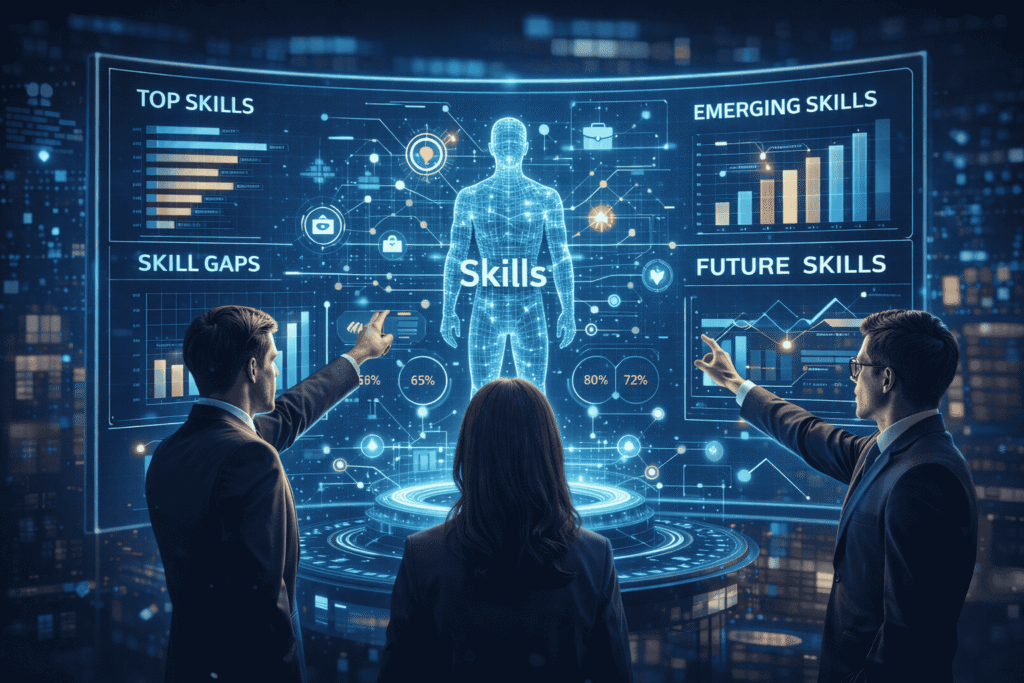
A Skill Intelligence Engine is a technology layer that continuously analyzes skills across roles, employees, and business needs. It goes beyond simple skill inventories by linking skills to:
- Job roles
- Performance metrics
- Capability gaps
- Learning pathways
- Strategic business goals
At ThirdBracket, our Skill Intelligence Engine is designed to provide actionable insights, not just data. It enables organizations to see skill gaps in real time and prioritize interventions that drive measurable impact.
Core Components of a Skill Intelligence Engine
1. Skill-to-Role Mapping
A powerful Skill Intelligence Engine maps granular skills to specific roles. This ensures that organizations understand what “good” looks like for every role — today and tomorrow.
2. Capability Gap Analysis
By comparing current skills with required skills, Skill Intelligence highlights high-impact capability gaps that directly affect performance and growth.
3. Real-Time Skill Insights
Skills are dynamic. A Skill Intelligence Engine continuously updates skill relevance based on market trends, internal data, and evolving role requirements.
4. Business Outcome Alignment
Unlike traditional HR tools, Skill Intelligence connects skills to outcomes such as productivity, innovation, and revenue impact.
How Skill Intelligence Transforms Workforce Strategy
Smarter Hiring Decisions
With Skill Intelligence, hiring is no longer about keywords on resumes. Recruiters can focus on critical skills that drive success, reducing time-to-hire and improving quality of hire.
Targeted Upskilling & Reskilling
Instead of generic training programs, Skill Intelligence enables precision learning. Employees receive training aligned to real capability gaps, not assumptions.
Internal Mobility & Talent Redeployment
Skill Intelligence uncovers hidden skills within the organization, enabling better internal mobility and reducing dependency on external hiring.
Future Workforce Planning
By analyzing emerging skills, a Skill Intelligence Engine helps leaders prepare for future roles before skill shortages become business risks.
Skill Intelligence vs Traditional Skill Frameworks
| Traditional Skill Frameworks | Skill Intelligence |
|---|---|
| Static and outdated | Dynamic and real-time |
| Role-based assumptions | Skill-based evidence |
| Manual updates | AI-powered insights |
| HR-focused | Business-aligned |
This shift from static frameworks to Skill Intelligence marks a fundamental change in how organizations manage talent.
Use Cases of Skill Intelligence Across Industries
- IT & Technology: Identify emerging tech skills and close critical capability gaps faster.
- Manufacturing: Align workforce skills with automation and Industry 4.0 initiatives.
- Finance & Banking: Ensure compliance, risk management, and digital transformation readiness.
- Consulting & Professional Services: Match skills to projects for optimal utilization.
No matter the industry, Skill Intelligence enables data-backed workforce decisions.
Why ThirdBracket’s Skill Intelligence Engine Is Different
ThirdBracket’s Skill Intelligence Engine is built with a clear philosophy: skills should drive strategy, not the other way around.
What sets us apart:
- Proprietary skill-to-role mapping logic
- Real-time capability gap detection
- Business outcome–driven prioritization
- Scalable architecture for enterprises
Our platform helps organizations move from skill awareness to skill action.
The Future of Skill Intelligence
As AI, automation, and digital transformation accelerate, Skill Intelligence will become a core enterprise capability — not just an HR function.
In the future:
- Skills will replace job titles as the primary workforce unit
- Learning will be continuously guided by Skill Intelligence
- Workforce planning will be predictive, not reactive
Organizations that invest in Skill Intelligence today will be the ones that stay competitive tomorrow.
Final Thoughts: Skill Intelligence as a Competitive Advantage
Skill Intelligence is no longer optional. It is a strategic necessity for organizations that want to grow, adapt, and lead in an uncertain world.
A modern Skill Intelligence Engine empowers leaders with clarity, agility, and confidence in workforce decisions. It turns skills into measurable assets and capability gaps into growth opportunities.
If your organization wants to build a future-ready workforce, Skill Intelligence is the place to start.