
In today’s rapidly evolving workplace, organizations must continuously adapt to new technologies, changing market demands, and evolving workforce expectations. Employees are no longer satisfied with simply holding a job—they want meaningful work, opportunities to grow, and the ability to develop new skills.
At the same time, HR leaders are under pressure to fill skill gaps, improve employee retention, and build agile teams that can respond quickly to business needs.
This is where a Talent Marketplace becomes a powerful solution.
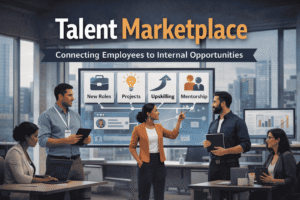
A talent marketplace is a digital platform that connects employees with internal opportunities such as projects, temporary assignments, mentorship programs, learning pathways, and new roles within the organization. By leveraging artificial intelligence (AI) and skills-based matching, talent marketplaces help HR teams identify the best internal talent for the right opportunities.
By enabling internal mobility and continuous skill development, talent marketplaces benefit both employees and organizations—creating a more flexible, transparent, and future-ready workforce.

What Is a Talent Marketplace?
A talent marketplace is an AI-powered platform designed to match employees’ skills, experiences, interests, and career goals with the organization’s needs.
Instead of relying only on traditional hiring processes, companies can use internal talent marketplaces to discover existing talent within their workforce.
These platforms create a dynamic environment where employees can explore new opportunities without leaving the company, while organizations gain better visibility into their workforce capabilities.
A talent marketplace helps organizations:
- Identify the best internal candidates for open roles
- Provide employees with career growth opportunities
- Promote internal mobility and skill development
- Close skill gaps faster
- Improve employee engagement and retention
In simple terms, a talent marketplace connects people, skills, and opportunities inside an organization.
How a Talent Marketplace Works
Talent marketplaces use advanced technologies such as AI, machine learning, and data analytics to match employees with opportunities that align with their abilities and career ambitions.
Below is a step-by-step breakdown of how talent marketplaces function.
1. Skills Collection and Mapping
The first step in a talent marketplace is building a comprehensive profile for each employee.
Employees create profiles that include:
- Skills and competencies
- Work experience
- Interests and career goals
- Learning preferences
- Certifications and training
AI-powered systems analyze this data to identify strengths and potential career paths.
This process helps HR teams build a skills inventory across the entire organization, making it easier to match the right talent to the right work.
2. Matching Employees with Opportunities
Once employee skills are mapped, the talent marketplace continuously scans internal opportunities such as:
- Job openings
- Cross-functional projects
- Temporary assignments
- Internal gigs
- Leadership programs
AI algorithms analyze both employee profiles and opportunity requirements to recommend the best matches.
Managers can also search the platform to find suitable internal candidates for projects or roles.
This approach helps organizations utilize existing talent before looking externally.
3. Enabling Learning and Upskilling
Many talent marketplaces integrate with learning platforms to support employee development.
If an employee lacks certain skills for a desired role, the platform recommends learning resources such as:
- Training programs
- Online courses
- Certifications
- Workshops
- On-the-job experiences
Employees can proactively develop new capabilities that prepare them for future roles.
This creates a culture of continuous learning and professional growth.
4. Supporting Internal Mobility
One of the biggest benefits of a talent marketplace is enabling internal career movement.
Employees gain visibility into new opportunities across departments and teams. Instead of leaving the company for growth, they can explore roles internally.
This leads to:
- Higher employee satisfaction
- Increased engagement
- Lower employee turnover
- Better talent retention
For organizations, internal mobility reduces recruitment costs and speeds up hiring processes.
5. Providing Workforce Insights
Talent marketplaces also provide valuable analytics and workforce insights for HR leaders.
Through dashboards and data reports, organizations can track:
- Skill availability across teams
- Workforce capability trends
- Internal mobility rates
- Employee engagement levels
- Skill gaps within the organization
These insights help HR teams plan better workforce strategies and make more informed decisions.
How Talent Marketplaces Help Employees Grow
A talent marketplace unlocks multiple career development opportunities for employees.
Instead of waiting for promotions or traditional career paths, employees can explore new ways to grow within the organization.
Here are some of the key opportunities talent marketplaces offer.
Upskilling and Skill Development
Upskilling helps employees remain competitive in a constantly changing work environment.
The talent marketplace identifies gaps between current skills and future role requirements and suggests learning opportunities.
Benefits include:
- Employees gain clear learning pathways
- Organizations prepare employees for future roles
- Continuous learning culture is promoted
For example, a customer support agent might receive recommendations to learn data analytics or automation skills, preparing them for advanced roles.
Internal Gig Opportunities
Internal gigs are short-term projects or assignments that allow employees to work outside their usual responsibilities.
Examples include:
- Contributing to product launches
- Supporting marketing campaigns
- Participating in innovation projects
- Mentoring junior employees
These gigs allow employees to develop new skills while helping teams complete important projects.
Mentorship and Coaching
Many talent marketplaces also include mentorship networks.
Employees are matched with mentors based on their career goals and development needs.
Benefits include:
- Knowledge sharing across the organization
- Leadership development
- Stronger professional relationships
- Improved career guidance
For example, a junior employee interested in leadership might be paired with a senior manager for mentoring.
Cross-Functional Rotational Programs
Rotational programs allow employees to work in different departments for short periods.
These programs help employees:
- Gain broader business knowledge
- Build diverse skill sets
- Improve collaboration across teams
For example, an employee may rotate through departments such as marketing, operations, product development, and finance.
Key Benefits of a Talent Marketplace
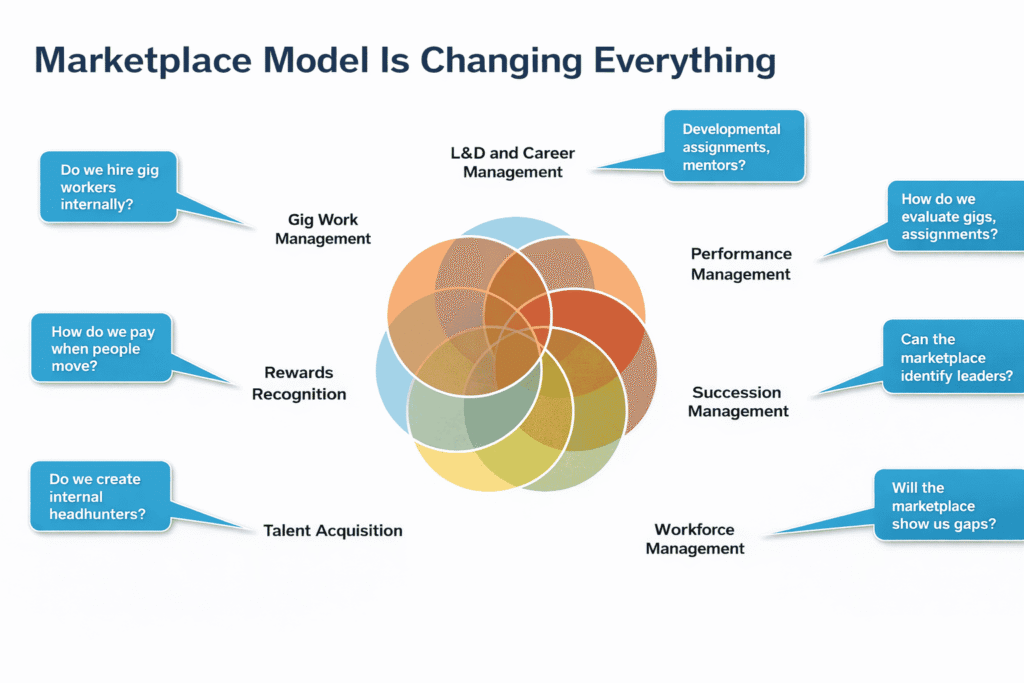
Organizations implementing talent marketplaces experience several strategic advantages.
Improved Employee Engagement and Retention
Employees are more likely to stay with organizations that support their growth and development.
Talent marketplaces give employees visibility into career opportunities, helping them progress without leaving the company.
This increases engagement and reduces turnover.
Skills-First Talent Management
Traditional workforce structures focus heavily on job titles.
Talent marketplaces shift the focus to skills-based talent management, allowing organizations to assign work based on capabilities rather than rigid roles.
This creates a more flexible and innovative workforce.
Closing Skill Gaps
Skill shortages are one of the biggest challenges organizations face today.
Talent marketplaces help bridge these gaps by connecting employees with training, mentorship, and hands-on experiences that develop critical skills internally.
Better Workforce Planning
HR teams gain real-time insights into the workforce.
By analyzing skills data and employee interests, organizations can plan future talent needs more effectively.
This improves succession planning and strategic workforce development.
Promoting Diversity and Inclusion
Talent marketplaces create equal access to opportunities.
Instead of relying on personal networks or visibility, employees can explore opportunities based on their skills and interests.
This promotes fairness, transparency, and inclusive career advancement.
Key Components of a Successful Talent Marketplace
A well-designed talent marketplace relies on several critical elements.
Skills Assessments
Accurate skill data forms the foundation of any talent marketplace.
Employees should regularly update their skills, experiences, and interests, while managers define the skills required for roles and projects.
AI-Powered Technology
AI technology enables intelligent matching between employees and opportunities.
It helps reduce bias, improve accuracy, and ensure the right people are connected to the right work.
Personalization for Employees
Each employee receives personalized recommendations based on their career goals, experience, and interests.
This makes the platform more engaging and relevant.
Workforce Analytics
Analytics tools provide insights into marketplace usage, engagement levels, internal mobility rates, and workforce trends.
These insights help HR teams continuously improve talent strategies.
Best Practices for Implementing a Talent Marketplace
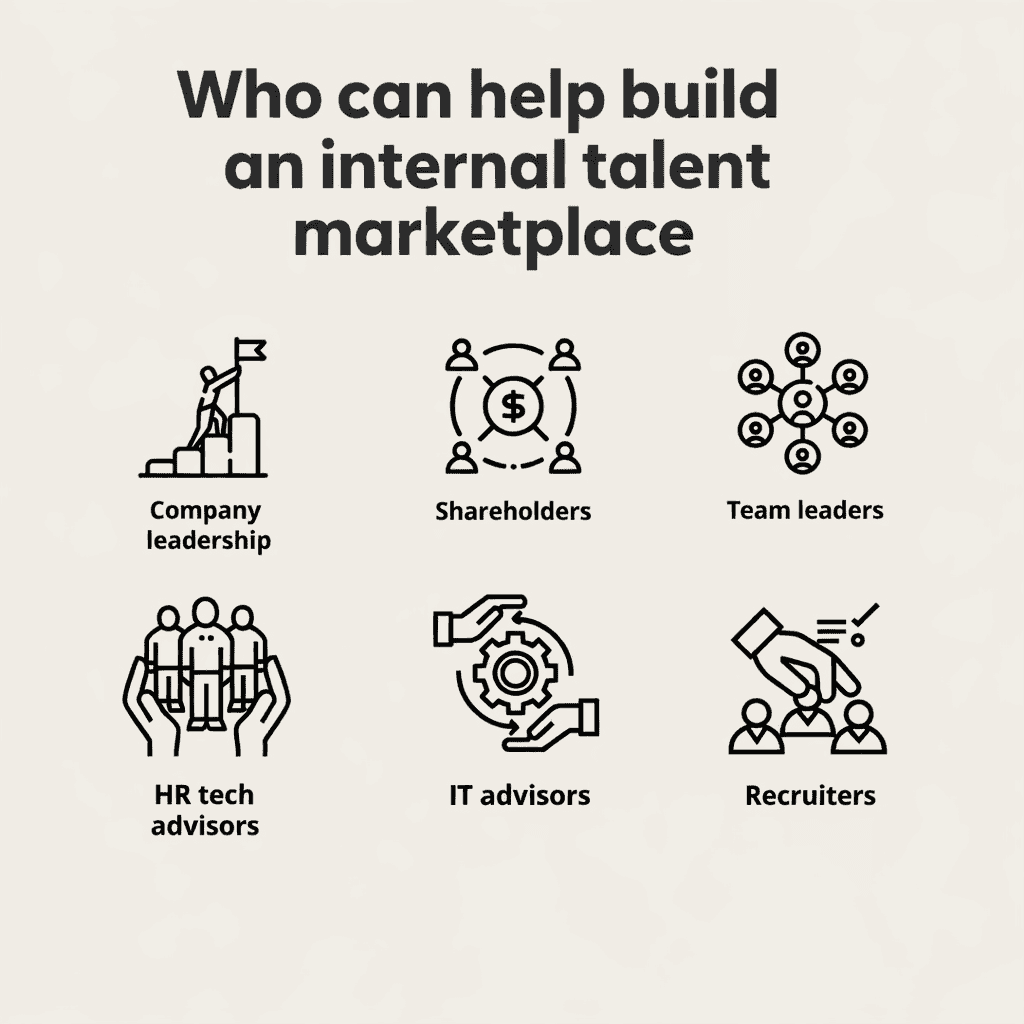
To successfully implement a talent marketplace, organizations should follow these best practices.
Define Clear Objectives
Start by identifying what you want to achieve.
Goals may include:
- Improving internal mobility
- Closing skill gaps
- Increasing employee engagement
- Supporting digital transformation
Choose the Right Technology
Select a platform that integrates with your existing HR systems and supports AI-driven recommendations, scalability, and strong data security.
Gain Leadership Support
Leadership buy-in is essential for successful adoption.
When leaders actively promote the marketplace, employees are more likely to engage with it.
Start with a Pilot Program
Instead of launching across the entire organization at once, begin with a pilot program in a specific department.
This allows organizations to test the system, gather feedback, and refine the platform before scaling.
Internal talent Market place – CLICK HERE
External talent market place – CLICK HERE
Final Thoughts
A talent marketplace is transforming how organizations manage talent, develop employees, and build agile workforces.
By connecting employees with opportunities based on their skills and aspirations, talent marketplaces create a dynamic workplace where people can continuously learn, grow, and contribute.
For HR teams, these platforms provide powerful insights into workforce capabilities, enabling smarter talent decisions and stronger workforce planning.
Organizations that invest in talent marketplaces today are building a future-ready workforce—one that is adaptable, engaged, and equipped to meet tomorrow’s challenges.