
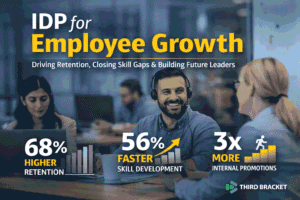
In today’s fast-changing workplace, employee growth is no longer a “nice-to-have” — it is a business necessity. Organizations that invest in structured development pathways consistently see stronger retention, better performance, and a healthier leadership pipeline. This is exactly where IDP for employee growth becomes a game-changing strategy.
At Third Bracket, where AI-powered talent intelligence and personalized learning pathways are central to workforce transformation, IDPs align perfectly with the larger goal of unlocking employee potential through data-driven growth.
This blog will help HR leaders, founders, talent managers, and L&D professionals understand how to use IDPs to drive measurable employee growth.
Table of Contents
What is an IDP for Employee Growth?
An IDP (Individual Development Plan) is a personalized roadmap that helps employees identify:
- Career goals
- Current skill gaps
- Learning priorities
- Development milestones
- Timelines for growth
- Required support from managers
Think of it as a bridge between where the employee is today and where they want to be tomorrow.
A strong IDP for employee growth connects employee aspirations with organizational needs, ensuring development is meaningful for both the individual and the business.
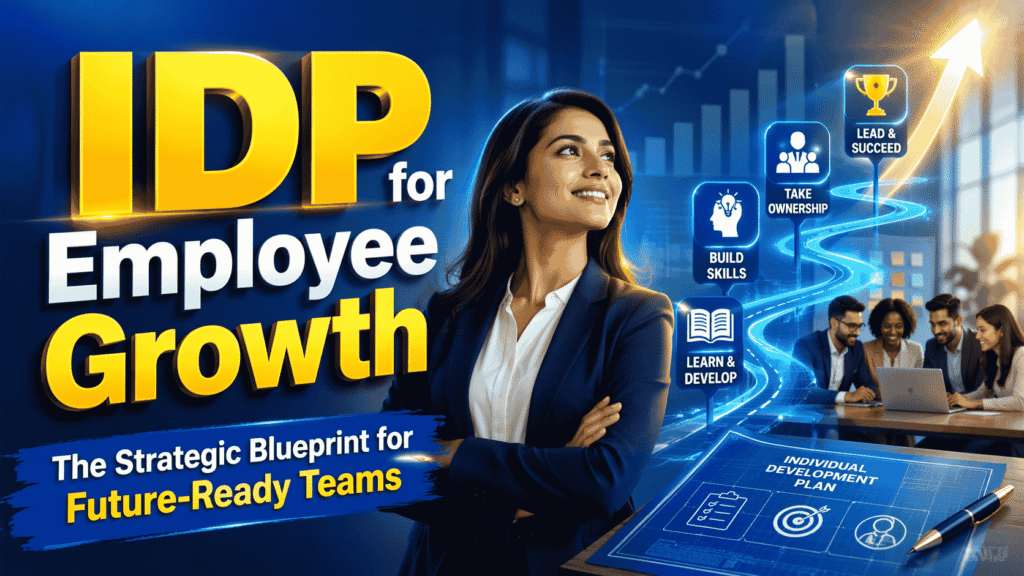
Why IDP for Employee Growth Matters More Than Ever
Modern employees want more than salary increments. They want:
- Career clarity
- Future opportunities
- Skill advancement
- Leadership exposure
- Personalized growth
When companies fail to offer this, top talent starts looking elsewhere.
A structured IDP for employee growth helps organizations create a culture of internal mobility and continuous learning, reducing attrition while improving engagement. Research consistently shows employees stay longer when they can clearly see their growth path.
For platforms like Third Bracket, which focus on skill-to-role mapping, competency intelligence, and career pathways, IDPs become a natural extension of talent strategy.
Top 10 Prismforce Alternatives and Competitors in 2026 – Click here
Key Benefits of IDP for Employee Growth
1) Creates Clear Career Direction
Employees often underperform not because they lack capability, but because they lack direction.
An IDP helps answer:
- What role am I growing into?
- What skills do I need next?
- What experiences should I build?
- What timeline am I working toward?
This clarity improves motivation and accountability.
2) Closes Skill Gaps Faster
Skill gaps are one of the biggest barriers to growth.
With an effective IDP for employee growth, organizations can identify:
- Technical skill gaps
- Leadership competency gaps
- Functional expertise gaps
- Behavioral skill gaps
- Cross-functional exposure needs
This ensures learning is highly targeted instead of generic.
3) Improves Retention and Engagement
Employees who feel invested in are more likely to stay.
A well-designed IDP signals:
“Your growth matters here.”
This directly impacts:
- Employee loyalty
- Engagement scores
- Internal promotion rates
- Manager-employee trust
- Employer branding
4) Builds Leadership Pipeline
Future leaders are not created overnight.
A scalable IDP for employee growth helps companies prepare employees for:
- Team lead roles
- Managerial responsibilities
- Strategic decision-making
- Succession readiness
- Cross-functional leadership
This reduces dependence on expensive external hiring.
5) Aligns Learning with Business Goals
The biggest problem with many L&D programs is lack of relevance.
An IDP ensures employee development directly supports:
- Business growth plans
- Digital transformation
- Capability building
- Role transitions
- Talent succession
This is where Third Bracket’s AI-led workforce intelligence can significantly improve precision in development planning.
Essential Components of an Effective IDP for Employee Growth
A successful IDP must include these building blocks:
1. Career Goal
Define the target role or capability milestone.
Example:
“Become a Senior Product Manager in 12 months.”
2. Current Strength Assessment
Document:
- Existing competencies
- High-performance areas
- Unique strengths
- Role readiness indicators
3. Skill Gap Analysis
Identify missing capabilities.
Example:
- Data storytelling
- Stakeholder management
- Strategic thinking
- Team leadership
- AI tool adoption
4. Learning Actions
Specific development steps such as:
- Courses
- Certifications
- Mentoring
- Stretch projects
- Job shadowing
- Leadership assignments
5. Success Metrics
Growth must be measurable.
Examples:
- Promotion readiness score
- Skill assessment improvement
- Project ownership
- Performance ratings
- Certification completion
6. Timeline and Review Cadence
Best practice:
- Monthly check-ins
- Quarterly review
- 6–12 month growth cycle
IDPs should always be living documents, not annual paperwork.
How HR Teams Can Build an IDP for Employee Growth
Step 1: Start with Skill Intelligence
Before planning development, understand:
- Current role skills
- Future role skills
- Market benchmarks
- Internal competency frameworks
This is where AI-based talent platforms like Third Bracket can create a strong data layer.
Step 2: Align Aspirations with Business Needs
The best growth plans sit at the intersection of:
- Employee ambition
- Manager feedback
- Business roadmap
- Succession planning
Step 3: Create Personalized Learning Journeys
Avoid one-size-fits-all training.
Instead, map:
- Individual learning style
- Preferred growth pace
- Business-critical competencies
- Real-world assignments
Step 4: Enable Manager Coaching
Managers should act as growth partners.
Their role includes:
- Feedback loops
- Stretch opportunity allocation
- Progress review
- Motivation support
- Roadblock removal
Step 5: Track Outcomes with Data
Every IDP for employee growth should answer:
Is this employee becoming more future-ready?
Track:
- Competency uplift
- Internal movement
- Role transitions
- Bench strength
- Promotion velocity
Common Mistakes to Avoid in IDP for Employee Growth
❌ Making It a Yearly HR Formality
IDPs fail when they become paperwork.
❌ No Clear Metrics
Growth without measurement becomes guesswork.
❌ Generic Learning Recommendations
Every employee needs personalized pathways.
❌ Ignoring Manager Accountability
Without manager support, IDPs collapse.
❌ No Link to Future Roles
Development must map to actual opportunities.
How AI Improves IDP for Employee Growth
The future of employee development is AI-powered.
AI helps by:
- Mapping skills to future roles
- Predicting growth potential
- Recommending personalized learning paths
- Identifying leadership readiness
- Automating competency tracking
- Building dynamic career paths
This directly aligns with Third Bracket’s positioning around AI-powered skills profiling, learning pathways, performance analytics, and career planning.
With AI, IDPs evolve from static documents into living growth systems.
Final Thoughts
A well-designed IDP for employee growth is one of the most powerful tools for building high-performing, future-ready teams.
It helps organizations move beyond traditional performance management and focus on what truly matters:
- Continuous capability building
- Leadership development
- Skill intelligence
- Career visibility
- Retention through growth
For organizations looking to build smarter talent ecosystems, combining IDPs with AI-driven platforms like Third Bracket can create a measurable competitive advantage in workforce transformation.
The companies that win tomorrow will be the ones that help their people grow today.