
The workplace is changing faster than ever before. Artificial Intelligence is reshaping industries, employee expectations are evolving, and organizations are struggling to find the right talent at the right time. Traditional hiring models and workforce planning approaches are no longer enough to keep businesses competitive.
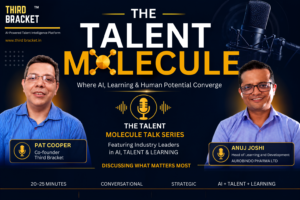
At Third Bracket, we believe that the future belongs to organizations that understand skills, talent mobility, and workforce intelligence better than anyone else. This vision inspired the launch of the Third Bracket Talk Series, a platform designed to bring together HR leaders, talent strategists, business executives, and technology innovators to discuss the trends shaping tomorrow’s workforce.
The latest edition of the Third Bracket Talk Series explored one of the most critical questions facing organizations today:
How can businesses prepare for the future of work while building a workforce that is agile, skilled, and ready for constant change?

Why the Future of Work Matters More Than Ever
The world of work has undergone a massive transformation over the past few years.
Organizations are no longer hiring simply for job titles. Instead, companies are focusing on capabilities, competencies, and transferable skills.
Several factors are driving this shift:
- Rapid advancements in Artificial Intelligence
- Growing demand for digital skills
- Hybrid and remote working models
- Increasing talent shortages
- Employee preference for career growth opportunities
- Continuous business disruption
Research suggests that many skills considered important today may become obsolete within a few years. This means organizations need a smarter approach to workforce planning.
Businesses must move beyond traditional HR systems and adopt data-driven strategies that provide visibility into employee skills, career aspirations, and future capability requirements.
This is where Talent Intelligence becomes essential.
Understanding Talent Intelligence
Talent Intelligence refers to the use of data, analytics, and AI-powered insights to understand workforce capabilities and make better talent decisions.
Rather than relying solely on resumes, job descriptions, or years of experience, Talent Intelligence helps organizations answer important questions such as:
- What skills already exist within the company?
- Which critical capabilities are missing?
- Who can be reskilled for emerging roles?
- What future skills will the organization need?
- Which employees have leadership potential?
Talent Intelligence enables companies to create a dynamic workforce ecosystem where employees can continuously learn, grow, and contribute in meaningful ways.
Moving from Jobs to Skills
One of the most insightful discussions during the Third Bracket Talk Series focused on the transition from job-based organizations to skill-based organizations.
For decades, companies structured work around fixed job roles.
However, the pace of technological change has made this model increasingly ineffective.
Today, organizations are beginning to think differently.
Instead of asking:
“Do we have enough software developers?”
Companies are asking:
“Do we have people skilled in Python, machine learning, cloud computing, and data engineering?”
This subtle shift changes everything.
A skills-first approach allows organizations to:
- Improve workforce agility
- Reduce hiring costs
- Increase internal mobility
- Retain top performers
- Create personalized career pathways
- Build stronger succession plans
By understanding skills at a granular level, businesses can unlock hidden potential within their existing workforce.
The Growing Importance of Internal Talent Mobility
Another major theme discussed during the session was internal mobility.
Employees today expect more than compensation packages.
They want meaningful work.
They want opportunities to learn.
They want visibility into future career possibilities.
Organizations that fail to provide these opportunities often struggle with employee retention.
Internal talent marketplaces are emerging as a powerful solution.
These platforms help employees discover projects, mentorship programs, stretch assignments, and new roles based on their skills and interests.
For businesses, this means:
- Lower recruitment expenses
- Faster role fulfillment
- Better employee engagement
- Improved workforce utilization
Talent mobility is becoming a strategic advantage rather than just an HR initiative.
How Artificial Intelligence is Transforming Talent Management
Artificial Intelligence is no longer a futuristic concept.
It is already changing how organizations hire, develop, and retain talent.
AI-powered systems can analyze thousands of employee profiles, learning records, and performance indicators within seconds.
Some key applications include:
Skill Identification
AI can automatically identify existing capabilities and create comprehensive skill profiles for employees.
Skill Gap Analysis
Organizations can compare current workforce capabilities against future business needs.
Personalized Learning Recommendations
Employees receive customized training suggestions aligned with career aspirations.
Succession Planning
Leaders can identify high-potential employees and prepare them for critical roles.
Workforce Forecasting
Businesses can anticipate future talent shortages and take proactive action.
AI does not replace human decision-making.
Instead, it empowers HR teams and business leaders with better insights.
Building a Skills-Based Organization
Transitioning to a skills-based organization requires a strategic approach.
Here are five practical steps businesses can take.
1. Create a Skills Taxonomy
Develop a common language for skills across departments.
This helps standardize talent data and improve workforce visibility.
2. Assess Existing Capabilities
Conduct skill assessments to understand what expertise already exists within the organization.
3. Invest in Continuous Learning
Encourage employees to upgrade their skills regularly through learning platforms, certifications, and mentoring.
4. Promote Internal Mobility
Enable employees to move across projects, teams, and business units.
5. Use Talent Intelligence Platforms
Adopt modern solutions that provide real-time insights into workforce capabilities and future readiness.
Leadership in the Future of Work
Technology alone cannot drive transformation.
Leadership plays an equally important role.
Future-ready leaders need to embrace change, foster innovation, and create cultures where learning becomes a continuous process.
Organizations that prioritize employee development are more likely to attract top talent and remain resilient during periods of uncertainty.
Leaders should focus on:
- Encouraging experimentation
- Supporting career growth
- Promoting collaboration
- Recognizing emerging talent
- Investing in workforce wellbeing
The future of work is not simply about adopting new tools.
It is about building organizations where people can thrive.
Why Conversations Like the Third Bracket Talk Series Matter
The workplace challenges businesses face today cannot be solved in isolation.
Leaders need platforms where they can exchange ideas, share experiences, and learn from industry experts.
The Third Bracket Talk Series aims to bridge this gap.
By bringing together professionals from diverse backgrounds, the series creates meaningful conversations around:
- Talent Intelligence
- Skill Intelligence Platforms
- Workforce Transformation
- AI in Human Resources
- Succession Planning
- Learning and Development
- Talent Supply Chain Management
These discussions provide organizations with actionable insights that can help them navigate uncertainty and prepare for the future.
Final Thoughts
The future of work is already here.
Organizations that continue relying on outdated workforce models risk falling behind competitors who embrace skills, intelligence, and agility.
Talent is no longer defined by resumes alone.
It is defined by capabilities, adaptability, and continuous learning.
Through initiatives like the Third Bracket Talk Series, businesses can gain access to fresh perspectives and innovative strategies that support long-term growth.
At Third Bracket, we are committed to helping organizations unlock the full potential of their workforce through Talent Intelligence, Skill Intelligence, and AI-powered workforce solutions.
Because the organizations that understand skills today will lead industries tomorrow.
Explore Third Bracket’s Talent Intelligence solutions and discover how your organization can build a future-ready workforce.