
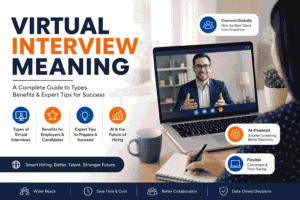
Hiring has evolved significantly over the past few years, and virtual interviews have become a standard practice for organizations worldwide. Whether you’re a recruiter, HR professional, or job seeker, understanding the virtual interview meaning is essential in today’s digital-first workplace.
Businesses are increasingly adopting remote hiring practices to access global talent, reduce recruitment costs, and accelerate hiring decisions. Meanwhile, candidates appreciate the flexibility and convenience that online interviews provide.
In this comprehensive guide, we will explore the virtual interview meaning, different interview formats, advantages, challenges, preparation tips, and how artificial intelligence is transforming virtual recruitment.
What is the Meaning of a Virtual Interview?
A virtual interview is a job interview conducted through digital communication platforms instead of face-to-face meetings. It allows employers and candidates to interact remotely using video conferencing software, telephone calls, or specialized interview platforms.
Simply put, the virtual interview meaning refers to an interview process where participants communicate online from different locations using internet-enabled devices.
Virtual interviews replicate many aspects of traditional interviews while eliminating geographical barriers.
Companies commonly use tools such as:
- Zoom
- Microsoft Teams
- Google Meet
- Skype
- Webex
- AI-powered hiring platforms
Virtual interviews are now widely used for:
- Initial screening rounds
- Technical assessments
- Panel discussions
- Executive hiring
- Campus recruitment
- International talent acquisition
Why Virtual Interviews Have Become Popular
Organizations have embraced online interviewing because it aligns perfectly with modern workforce trends.
Several factors have contributed to their growing popularity.
1. Remote Work Expansion
Remote and hybrid work models have encouraged businesses to build distributed teams across multiple locations.
Virtual interviews make it easier to evaluate candidates regardless of where they live.
2. Faster Hiring Process
Scheduling physical interviews often involves logistical challenges.
Online interviews reduce waiting periods and help recruiters make quicker decisions.
3. Access to Global Talent
Companies can connect with skilled professionals from different countries without travel expenses.
This significantly expands the talent pool.
4. Cost Reduction
Employers save money on:
- Travel reimbursements
- Accommodation costs
- Venue arrangements
- Administrative expenses
5. Improved Candidate Experience
Candidates appreciate the flexibility of attending interviews from their homes, resulting in a more convenient hiring experience.
Types of Virtual Interviews
Understanding various interview formats helps both recruiters and applicants prepare effectively.
1. Live Video Interviews
This is the most common type of virtual interview.
Candidates and interviewers communicate in real-time using video conferencing software.
Examples include:
- Zoom interviews
- Google Meet interviews
- Microsoft Teams interviews
These interviews closely resemble traditional face-to-face conversations.
2. Phone Interviews
Phone interviews are usually conducted during the early stages of recruitment.
Recruiters assess:
- Communication skills
- Professional background
- Salary expectations
- Availability
Although they do not involve video interaction, they still fall under the category of virtual interviews.
3. One-Way Video Interviews
In this format, candidates receive pre-recorded questions and submit their responses through video recordings.
Recruiters can review these responses at their convenience.
Benefits include:
- Time efficiency
- Standardized evaluation
- Reduced scheduling conflicts
4. Panel Virtual Interviews
Several interviewers participate simultaneously from different locations.
Panel interviews are commonly used for:
- Leadership positions
- Senior management hiring
- Technical assessments
5. AI-Powered Virtual Interviews
Artificial intelligence has introduced a new dimension to online recruitment.
AI-based platforms can analyze:
- Speech patterns
- Communication abilities
- Skill alignment
- Behavioral indicators
These systems help organizations identify suitable candidates faster.
Explore our Talent Acquisition Platform – CLICK HERE
Benefits of Virtual Interviews
Virtual interviews offer advantages for both employers and job seekers.
Benefits for Employers
Reduced Recruitment Costs
Organizations no longer need to arrange travel or office visits.
Hiring budgets become more efficient.
Faster Decision-Making
Recruiters can schedule multiple interviews within a single day.
This shortens the overall hiring timeline.
Better Collaboration
Hiring managers from different departments can join interviews without being physically present.
Increased Diversity
Businesses can attract talent from different regions, cultures, and backgrounds.
This leads to stronger and more inclusive teams.
Benefits for Candidates
Convenience
Applicants can attend interviews without commuting long distances.
Less Stress
Many candidates feel more comfortable speaking from familiar surroundings.
Time Savings
Virtual interviews eliminate travel time and associated expenses.
More Opportunities
Professionals can apply for positions worldwide.
Geographical limitations become less significant.
Challenges of Virtual Interviews
Despite their advantages, online interviews also present several obstacles.
Technical Issues
Internet disruptions can negatively impact communication.
Common problems include:
- Poor audio quality
- Frozen screens
- Connection failures
Testing devices before the interview is highly recommended.
Limited Personal Interaction
Virtual environments sometimes make it difficult to establish rapport.
Body language may not be fully visible.
Distractions at Home
Unexpected interruptions from family members, pets, or background noise can affect performance.
Digital Fatigue
Conducting multiple online interviews throughout the day can cause mental exhaustion.
Recruiters and candidates should schedule breaks whenever possible.
How Candidates Can Prepare for a Virtual Interview
Preparation remains one of the biggest factors influencing interview success.
Here are some practical strategies.
Research the Company
Understand the organization’s:
- Products
- Services
- Mission
- Industry position
Review recent company announcements and achievements.
Test Technology in Advance
Check:
- Camera functionality
- Microphone quality
- Internet stability
- Software updates
Joining the meeting five to ten minutes early is a good practice.
Choose a Professional Background
A clean and organized background creates a positive impression.
Avoid:
- Cluttered rooms
- Bright windows behind you
- Distracting decorations
Dress Professionally
Even when interviewing from home, professional attire demonstrates seriousness and respect.
Business casual clothing works well for most industries.
Maintain Eye Contact
Look directly into the camera while speaking.
This creates the impression of making eye contact with interviewers.
Practice Common Questions
Examples include:
“Tell us about yourself.”
“Why do you want to work here?”
“Describe a challenging situation you handled.”
Mock interviews can improve confidence considerably.
Best Practices for Recruiters Conducting Virtual Interviews
Recruiters also play an important role in ensuring successful interviews.
Provide Clear Instructions
Candidates should receive information regarding:
- Interview date
- Meeting link
- Platform requirements
- Duration
- Interview agenda
Standardize Evaluation Criteria
Using structured scorecards promotes fair and objective assessments.
Minimize Bias
Virtual hiring platforms equipped with AI can help reduce unconscious bias during screening.
Record Interviews Responsibly
Recorded interviews allow hiring teams to revisit candidate responses.
However, recruiters should always obtain proper consent.
Focus on Candidate Experience
Respond promptly to questions and maintain transparent communication throughout the recruitment journey.
Positive experiences strengthen employer branding.
How Artificial Intelligence is Changing Virtual Interviews
Artificial intelligence has become one of the most influential technologies in talent acquisition.
Modern recruitment platforms leverage AI to improve hiring efficiency.
Capabilities include:
Resume Parsing
AI automatically extracts candidate information from resumes.
Skill Matching
Algorithms compare applicant skills with job requirements.
Behavioral Insights
Some platforms evaluate speech patterns and communication styles.
Automated Scheduling
Interview coordination becomes faster and more efficient.
Predictive Analytics
Organizations can identify candidates who are likely to perform well in specific roles.
Companies investing in talent intelligence solutions are increasingly combining virtual interviews with AI-driven insights to make data-backed hiring decisions.
Virtual Interviews vs Traditional Interviews
| Feature | Virtual Interview | Traditional Interview |
|---|---|---|
| Location | Remote | Office-based |
| Travel Cost | None | Required |
| Scheduling | Flexible | Less Flexible |
| Time Consumption | Low | Higher |
| Candidate Reach | Global | Localized |
| Technology Dependency | High | Low |
| Setup Cost | Minimal | Expensive |
Both methods have their strengths.
Many organizations now prefer a hybrid recruitment strategy that combines virtual and in-person interactions.
Future of Virtual Interviews
Virtual interviewing is expected to become even more sophisticated in the coming years.
Emerging trends include:
AI Interview Assistants
Intelligent systems may help recruiters generate interview questions automatically.
Immersive Experiences
Virtual reality could create realistic office simulations for candidates.
Enhanced Analytics
Employers will gain deeper insights into candidate competencies and cultural fit.
Integration with Talent Intelligence Platforms
Organizations are increasingly adopting talent intelligence ecosystems that connect interviews, assessments, workforce planning, and skill analytics into a single platform.
This integrated approach enables businesses to make smarter hiring decisions while improving overall workforce agility.
Conclusion
The virtual interview meaning extends far beyond simply conducting interviews online. It represents a modern, efficient, and technology-driven approach to talent acquisition that benefits employers and candidates alike.
Virtual interviews help organizations reduce hiring costs, accelerate recruitment, and access talent from around the world. For candidates, they offer flexibility, convenience, and broader career opportunities.
As artificial intelligence and talent intelligence platforms continue to evolve, virtual interviewing will become even more intelligent, personalized, and data-driven.
Organizations that embrace these innovations today will be better positioned to attract, engage, and retain top talent in the future.
Frequently Asked Questions (FAQs)
What is the simple meaning of a virtual interview?
A virtual interview is a job interview conducted remotely through video conferencing platforms, phone calls, or online interview software.
What are the different types of virtual interviews?
Common types include live video interviews, phone interviews, one-way recorded interviews, panel interviews, and AI-powered interviews.
Which platforms are commonly used for virtual interviews?
Zoom, Microsoft Teams, Google Meet, Webex, and Skype are among the most widely used platforms.
How should I prepare for a virtual interview?
Test your technology, research the company, dress professionally, maintain eye contact, and practice answering common interview questions.
Are virtual interviews effective?
Yes. Virtual interviews are highly effective for screening candidates, reducing hiring costs, and improving recruitment efficiency.