
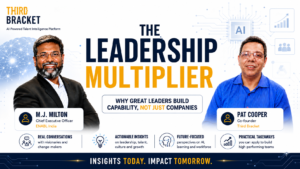
In today’s rapidly changing business landscape, organizations are discovering that sustainable success is no longer built solely on products, technology, or market share. Instead, it is driven by leaders who multiply the capabilities of the people around them. This concept is known as the Leadership Multiplier—a leadership philosophy that focuses on developing people, nurturing talent, and creating an environment where individuals and teams consistently perform at their highest potential.
As artificial intelligence reshapes industries and workforce expectations continue to evolve, leaders must shift from simply managing operations to building organizational capability. Companies that invest in leadership development create stronger cultures, retain top talent, accelerate innovation, and prepare themselves for long-term success.
In this article, we’ll explore what the Leadership Multiplier is, why it matters, and how organizations can implement multiplier leadership to thrive in the age of AI.

What is a Leadership Multiplier?
A Leadership Multiplier is a leader who increases the intelligence, confidence, capability, and performance of others. Instead of being the smartest person in the room, multiplier leaders empower their teams to think independently, solve problems creatively, and take ownership of outcomes.
Unlike traditional command-and-control leadership, multiplier leadership creates an environment where:
- Employees feel trusted.
- Innovation becomes a daily habit.
- Teams collaborate more effectively.
- Learning becomes continuous.
- Future leaders are developed from within.
Simply put, multiplier leaders don’t create followers—they create more leaders.
Why Leadership Multipliers Matter More Than Ever
Modern businesses face constant disruption caused by:
- Artificial Intelligence
- Digital transformation
- Skill shortages
- Remote work
- Changing customer expectations
- Global competition
These challenges cannot be solved by one individual, regardless of experience or expertise.
Organizations need leaders capable of unlocking collective intelligence across teams. This is where the Leadership Multiplier approach becomes a competitive advantage.
Companies with strong leadership cultures typically experience:
- Higher employee engagement
- Better retention rates
- Faster innovation
- Stronger organizational resilience
- Increased profitability
Leadership is no longer about authority—it’s about enabling capability.
Characteristics of a Leadership Multiplier
Successful multiplier leaders consistently demonstrate several key qualities.
1. They Develop People
Rather than solving every problem themselves, they coach employees to find solutions independently.
They ask:
- What do you think?
- What’s another approach?
- How would you solve this?
This builds confidence and long-term capability.
2. They Encourage Ownership
Multiplier leaders trust employees with meaningful responsibilities.
Ownership leads to:
- Better accountability
- Stronger decision-making
- Increased engagement
- Greater innovation
Employees perform better when they feel their contributions matter.
3. They Build Psychological Safety
People share ideas only when they feel safe from criticism.
Great leaders encourage:
- Open communication
- Constructive feedback
- Healthy debate
- Experimentation
- Learning from failure
Innovation grows in environments where people aren’t afraid to speak up.
4. They Create Continuous Learning
Learning is not limited to training sessions.
Leadership multipliers encourage:
- Coaching
- Mentorship
- Cross-functional projects
- Skill development
- Knowledge sharing
This creates adaptable organizations ready for future challenges.
5. They Think Long-Term
Instead of focusing only on quarterly targets, multiplier leaders invest in developing future leadership capability.
They understand that sustainable success comes from building stronger people—not just stronger processes.
Leadership Multiplier vs Traditional Leadership
| Traditional Leader | Leadership Multiplier |
|---|---|
| Gives answers | Asks powerful questions |
| Controls decisions | Empowers decisions |
| Builds followers | Develops leaders |
| Focuses on authority | Focuses on influence |
| Solves problems personally | Enables teams to solve problems |
| Measures output | Builds long-term capability |
The difference lies not in intelligence, but in how leaders unlock the intelligence of others.
How AI is Changing Leadership
Artificial Intelligence is transforming every industry.
Routine work is becoming automated, while human skills like creativity, emotional intelligence, collaboration, and strategic thinking are becoming more valuable.
Modern leaders must now:
- Lead hybrid teams
- Interpret workforce data
- Predict skill gaps
- Personalize employee development
- Support continuous learning
AI does not replace leadership—it enhances it.
Leaders who effectively combine AI insights with human empathy become true Leadership Multipliers.
Building Leadership Capability with Talent Intelligence
Organizations are increasingly adopting AI-powered talent intelligence platforms to strengthen leadership development.
These platforms help organizations:
- Identify high-potential employees
- Map workforce skills
- Predict future capability needs
- Design personalized learning journeys
- Improve succession planning
- Measure leadership effectiveness
Instead of relying on assumptions, leaders make decisions using real workforce intelligence.
The Role of Leadership in Workforce Transformation
Every transformation initiative succeeds or fails because of leadership.
Whether implementing AI, digital transformation, or organizational change, employees look to leaders for:
- Direction
- Confidence
- Communication
- Support
- Purpose
Multiplier leaders reduce resistance to change by involving employees throughout the transformation journey.
They help people understand not only what is changing but why it matters.
Practical Ways to Become a Leadership Multiplier
Every leader can adopt multiplier behaviors.
Listen More Than You Speak
Employees often have valuable ideas waiting to be heard.
Active listening improves trust and collaboration.
Coach Instead of Direct
Rather than giving immediate solutions, guide employees through problem-solving.
Coaching develops independent thinkers.
Recognize Strengths
Focus on what employees do well.
Building on strengths increases motivation and performance.
Delegate Meaningful Work
Delegation isn’t simply assigning tasks.
It’s providing opportunities for growth and leadership.
Encourage Curiosity
Innovation begins with questions.
Create a culture where employees feel comfortable exploring new ideas.
Invest in Learning
Future-ready organizations prioritize:
- Leadership development
- Digital skills
- AI literacy
- Communication
- Collaboration
Continuous learning keeps organizations competitive.
Leadership Multiplier in the Age of AI
Artificial Intelligence provides leaders with unprecedented visibility into workforce capabilities.
Modern AI-powered platforms can identify:
- Emerging skills
- Leadership readiness
- Learning opportunities
- Talent mobility
- Workforce risks
However, technology alone cannot inspire people.
Leadership remains deeply human.
The most successful organizations combine AI insights with authentic leadership to create engaged, adaptable, and high-performing teams.
Why Leadership Development is a Business Strategy
Leadership development is often viewed as an HR initiative.
In reality, it is a business strategy.
Organizations with strong leadership pipelines experience:
- Faster growth
- Better customer satisfaction
- Lower employee turnover
- Improved innovation
- Stronger succession planning
Investing in leaders creates long-term organizational value.
Creating High-Performing Teams
High-performing teams don’t happen by chance.
They are built intentionally through:
- Shared vision
- Clear communication
- Accountability
- Trust
- Continuous feedback
- Recognition
- Learning opportunities
Leadership Multipliers create environments where these behaviors become part of the culture.
The Future Belongs to Capability Builders
As industries continue to evolve, organizations will increasingly compete based on the capabilities of their workforce.
Technology can automate processes.
AI can analyze data.
But leadership remains the force that transforms potential into performance.
The organizations that thrive tomorrow will be those led by individuals who multiply talent rather than simply manage it.
Conclusion
The Leadership Multiplier is more than a leadership style—it’s a mindset focused on unlocking human potential. By developing people, encouraging ownership, fostering continuous learning, and leveraging AI-powered talent intelligence, leaders can build organizations that are resilient, innovative, and prepared for the future.
As businesses navigate rapid technological change, the greatest competitive advantage will not come from having the most advanced technology alone. It will come from leaders who inspire growth, cultivate capability, and empower others to succeed.
Whether you’re a CEO, HR leader, manager, or entrepreneur, embracing the Leadership Multiplier philosophy can transform your teams, strengthen your organization, and create lasting impact.
FAQs
What is a Leadership Multiplier?
A Leadership Multiplier is a leader who enhances the capability, confidence, and performance of others by empowering them to think independently and grow professionally.
Why is the Leadership Multiplier important?
It helps organizations improve employee engagement, innovation, leadership development, and long-term business performance.
How does AI support leadership development?
AI provides insights into workforce skills, identifies leadership potential, predicts future capability needs, and enables personalized learning and succession planning.
Can Leadership Multipliers improve employee retention?
Yes. Employees are more likely to stay with organizations where they feel trusted, supported, and given opportunities to grow.
How can organizations develop Leadership Multipliers?
Organizations can invest in coaching, mentorship, talent intelligence platforms, continuous learning, leadership programs, and a culture that encourages collaboration and innovation.