
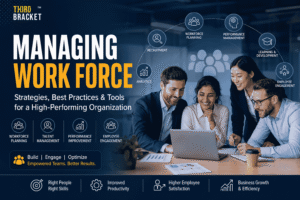
In today’s highly competitive business environment, managing work force has become one of the most important responsibilities for every organization. Whether you’re running a startup, an SME, or a multinational corporation, your employees are your greatest asset. The way you manage your workforce directly impacts productivity, employee satisfaction, customer experience, and overall business growth.
Modern businesses no longer rely solely on traditional workforce management methods. Instead, organizations are adopting AI-powered workforce planning, skill intelligence platforms, employee analytics, and automation to maximize efficiency while keeping employees engaged.
In this comprehensive guide, we’ll explore everything you need to know about managing work force, including strategies, best practices, common challenges, and the role of technology in transforming workforce management.

What is Managing Work Force?
Managing work force refers to the process of planning, organizing, supervising, developing, and optimizing employees to achieve organizational goals efficiently.
It involves ensuring that:
- The right employees are hired.
- Skills match business requirements.
- Employees remain productive.
- Resources are allocated efficiently.
- Performance is continuously improved.
- Employee engagement stays high.
Workforce management is much more than attendance tracking or payroll processing. It encompasses the entire employee lifecycle—from recruitment and onboarding to learning, performance management, succession planning, and retention.
Why Managing Work Force Matters
Organizations that effectively manage their workforce enjoy several competitive advantages.
Improved Productivity
Employees perform better when roles are clearly defined, workloads are balanced, and expectations are transparent.
Better Employee Engagement
People who feel valued, supported, and recognized contribute more actively toward business objectives.
Reduced Employee Turnover
Strong workforce management improves job satisfaction, reducing recruitment and replacement costs.
Enhanced Customer Experience
Engaged employees provide better service, leading to improved customer satisfaction and loyalty.
Increased Profitability
Optimized workforce planning helps organizations reduce operational costs while maximizing employee performance.
Core Components of Managing Work Force
Successful workforce management consists of multiple interconnected functions.
1. Workforce Planning
Workforce planning ensures organizations have the right people with the right skills at the right time.
It includes:
- Future hiring forecasts
- Skill gap analysis
- Capacity planning
- Resource allocation
- Succession planning
Proper planning prevents talent shortages and overstaffing.
2. Recruitment and Hiring
Hiring the right talent is the foundation of effective workforce management.
Organizations should focus on:
- Skills-based hiring
- AI-powered resume screening
- Structured interviews
- Cultural fit assessment
- Diversity hiring
Modern recruitment platforms help businesses identify high-quality candidates faster while reducing hiring bias.
3. Employee Onboarding
A structured onboarding process significantly improves employee retention.
Effective onboarding includes:
- Company orientation
- Role clarity
- Goal setting
- Mentor assignment
- Learning resources
Employees who receive proper onboarding become productive much faster.
4. Performance Management
Continuous performance management enables organizations to monitor employee progress and encourage improvement.
Key practices include:
- Regular feedback
- Goal setting
- Performance reviews
- Skill assessments
- Career development discussions
Annual appraisals alone are no longer sufficient in today’s fast-paced work environment.
5. Learning and Development
Continuous learning is essential for keeping employees relevant in an evolving workplace.
Organizations should invest in:
- Technical training
- Leadership development
- Soft skills improvement
- AI literacy
- Digital transformation skills
Upskilling existing employees is often more cost-effective than hiring new talent.
6. Employee Engagement
Employee engagement goes beyond job satisfaction.
Highly engaged employees:
- Take ownership
- Collaborate effectively
- Innovate frequently
- Stay longer
- Deliver higher-quality work
Regular surveys, recognition programs, and transparent communication contribute to higher engagement levels.
Common Challenges in Managing Work Force
Even well-established organizations face workforce management challenges.
Skill Gaps
Technology evolves faster than employee skills.
Businesses must continuously identify emerging skill requirements and provide relevant training.
Remote and Hybrid Work
Managing distributed teams introduces new complexities, including:
- Communication barriers
- Performance tracking
- Collaboration
- Employee engagement
- Time zone management
Organizations need digital collaboration tools and outcome-based performance metrics.
High Employee Turnover
Frequent resignations disrupt operations and increase hiring costs.
Improving career growth opportunities and workplace culture can significantly reduce attrition.
Workforce Planning Errors
Poor forecasting can result in:
- Understaffing
- Employee burnout
- Increased overtime costs
- Missed deadlines
Accurate workforce analytics helps organizations anticipate future talent needs.
Best Practices for Managing Work Force
Organizations that consistently outperform competitors follow several workforce management best practices.
Align Workforce Strategy with Business Goals
Employees should understand how their work contributes to company objectives.
Clear alignment increases motivation and accountability.
Invest in Skill Development
Learning should become part of organizational culture rather than an occasional activity.
Continuous upskilling prepares employees for future business needs.
Use Workforce Analytics
Data-driven decisions outperform assumptions.
Track metrics such as:
- Productivity
- Employee engagement
- Attrition
- Hiring efficiency
- Learning completion
- Skill readiness
Analytics helps HR leaders identify improvement opportunities.
Encourage Open Communication
Transparent communication builds trust between leadership and employees.
Organizations should encourage:
- Feedback sessions
- One-on-one meetings
- Town halls
- Anonymous employee surveys
Employees who feel heard are more likely to stay engaged.
Recognize Employee Contributions
Recognition boosts morale and motivates employees to perform better.
Recognition can include:
- Bonuses
- Public appreciation
- Awards
- Promotions
- Career advancement opportunities
Small gestures often create significant positive impacts.
The Role of AI in Managing Work Force
Artificial Intelligence is transforming workforce management across industries.
Modern AI solutions help organizations:
- Predict future hiring needs
- Match employees to projects
- Identify skill gaps
- Recommend learning paths
- Improve recruitment quality
- Analyze workforce productivity
- Support succession planning
Instead of replacing employees, AI enables HR teams to make faster and more informed decisions.
Workforce Management Technology
Technology has become an essential part of workforce management.
Popular workforce management solutions include:
- Human Resource Management Systems (HRMS)
- Applicant Tracking Systems (ATS)
- Talent Intelligence Platforms
- Skill Intelligence Platforms
- Employee Experience Platforms
- Learning Management Systems (LMS)
- Workforce Analytics Software
These platforms centralize employee information while automating repetitive HR tasks.
Measuring Workforce Management Success
Organizations should regularly monitor key performance indicators (KPIs).
Important workforce metrics include:
| KPI | Why It Matters |
|---|---|
| Employee Productivity | Measures operational efficiency |
| Employee Turnover Rate | Indicates retention success |
| Time-to-Hire | Evaluates recruitment efficiency |
| Employee Engagement Score | Measures workforce satisfaction |
| Training Completion Rate | Tracks learning effectiveness |
| Internal Mobility Rate | Shows career growth opportunities |
| Absenteeism Rate | Identifies workplace issues |
| Performance Ratings | Measures employee contribution |
Monitoring these metrics enables continuous improvement.
Future Trends in Managing Work Force
The future of workforce management will focus on intelligence, flexibility, and employee experience.
Emerging trends include:
AI-Driven Talent Intelligence
Organizations will increasingly rely on AI to predict workforce needs and recommend internal talent.
Skills-Based Organizations
Companies will prioritize skills over job titles when assigning work.
Internal Talent Marketplaces
Employees will move across projects based on capabilities rather than organizational hierarchy.
Personalized Learning
AI will recommend customized learning paths for every employee.
Predictive Workforce Analytics
Businesses will forecast resignations, hiring needs, and future skill shortages before they become problems.
Employee Experience Platforms
Organizations will invest more in improving employee well-being, engagement, and career development.
Internal Mobility Marketplace – Click here
Tips for Small Businesses Managing Work Force
Small businesses often have limited HR resources, but effective workforce management is still possible.
Start by:
- Clearly defining employee roles.
- Setting measurable goals.
- Providing regular feedback.
- Investing in employee training.
- Using affordable HR software.
- Encouraging collaboration.
- Rewarding high performance.
- Planning future hiring needs.
Simple improvements can produce significant long-term results.
How Managing Work Force Drives Business Growth
Organizations that effectively manage their workforce consistently achieve:
- Higher employee engagement
- Improved operational efficiency
- Faster hiring
- Better retention
- Increased innovation
- Stronger leadership pipelines
- Reduced operational costs
- Greater customer satisfaction
Workforce management is no longer just an HR responsibility—it’s a strategic business function that directly impacts organizational success.
Conclusion
Managing work force is one of the most critical factors determining long-term business success. Companies that invest in workforce planning, employee development, performance management, and AI-powered workforce intelligence create stronger, more agile organizations capable of adapting to rapid market changes.
As businesses continue embracing digital transformation, effective workforce management will shift from reactive administration to proactive talent optimization. Organizations that prioritize employee skills, engagement, learning, and data-driven decision-making will outperform competitors and build sustainable growth.
Whether you’re a business leader, HR professional, or entrepreneur, implementing modern workforce management strategies today will help create a productive, motivated, and future-ready workforce.
What does managing work force mean?
Managing work force refers to planning, organizing, developing, and optimizing employees to improve productivity, engagement, and business performance.
Why is managing work force important?
It helps organizations improve employee performance, reduce turnover, optimize resources, increase customer satisfaction, and achieve business goals more efficiently.
What are the key elements of workforce management?
The major elements include workforce planning, recruitment, onboarding, performance management, employee engagement, learning and development, workforce analytics, and succession planning.
How does AI improve managing work force?
AI helps automate recruitment, identify skill gaps, forecast workforce needs, personalize employee learning, improve productivity analysis, and support better HR decision-making.
Which industries benefit from workforce management?
Almost every industry—including healthcare, manufacturing, retail, IT, finance, education, logistics, hospitality, and professional services—benefits from effective workforce management practices.