
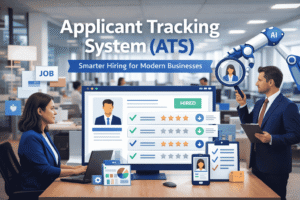
In today’s competitive job market, hiring the right talent quickly and efficiently is no longer optional—it’s a necessity. Companies that still rely on spreadsheets, emails, or manual screening often struggle with delayed hiring, poor candidate experience, and inconsistent decisions. This is where an Applicant Tracking System (ATS) becomes a game-changer.
An Applicant Tracking System is the backbone of modern recruitment. It helps organizations manage job postings, track applicants, automate screening, and collaborate with hiring teams—all from one centralized platform. In this detailed guide, we’ll explore what an ATS is, how it works, its benefits, key features, and why businesses of all sizes should adopt it to stay ahead.
Table of Contents

What is an Applicant Tracking System?
An Applicant Tracking System (ATS) is a recruitment software designed to manage the entire hiring lifecycle—from job posting to candidate onboarding. It allows HR teams and recruiters to collect, organize, screen, and evaluate job applications in a structured and efficient way.
Instead of juggling resumes across emails and folders, an ATS stores all candidate data in one place. It tracks every interaction, status update, and decision, ensuring transparency and consistency throughout the hiring process.
How Does an Applicant Tracking System Work?
An ATS simplifies hiring by automating repetitive and time-consuming tasks. Here’s how a typical ATS workflow looks:
Job Creation & Posting – Recruiters create job descriptions and publish them across multiple job boards and career pages simultaneously.
Application Collection – Candidates apply through a centralized portal, and their resumes are automatically stored in the system.
Resume Parsing & Screening – The ATS scans resumes, extracts key information, and filters candidates based on skills, experience, and keywords.
Candidate Shortlisting – Recruiters review ranked profiles and shortlist the most relevant candidates.
Interview Management – Interviews are scheduled, feedback is shared, and collaboration happens within the system.
Hiring & Onboarding – Once a candidate is selected, the ATS helps transition them smoothly into onboarding.
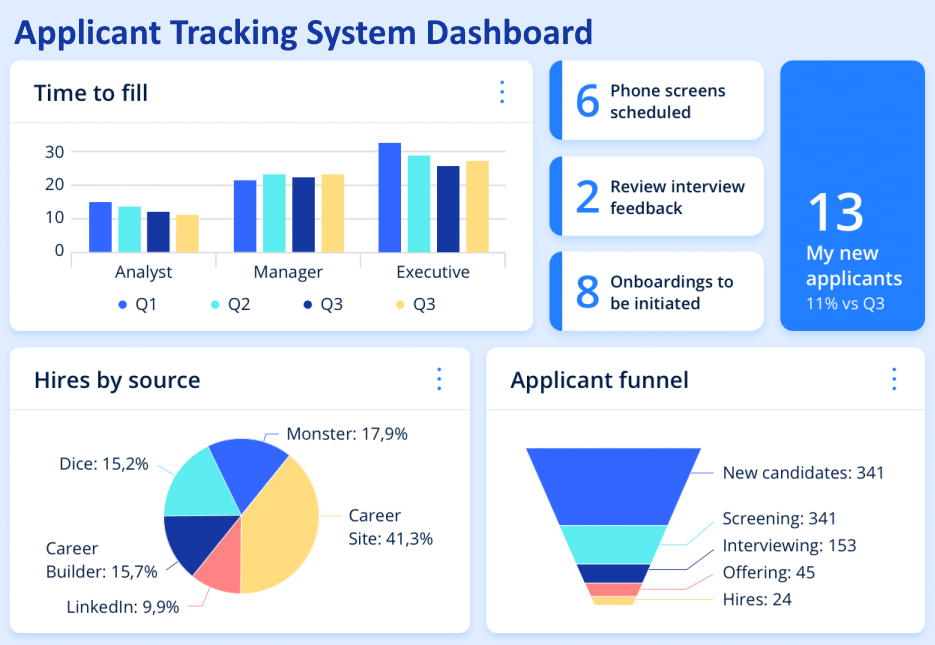
Why Applicant Tracking Systems Are Essential Today
Recruitment today is data-driven, fast-paced, and candidate-centric. An ATS is no longer just a “nice to have” tool—it’s essential for scaling hiring efforts.
Key Reasons Companies Use an ATS:
- High volume of applications for every role
- Need for faster time-to-hire
- Demand for better candidate experience
- Compliance with hiring regulations
- Data-backed hiring decisions
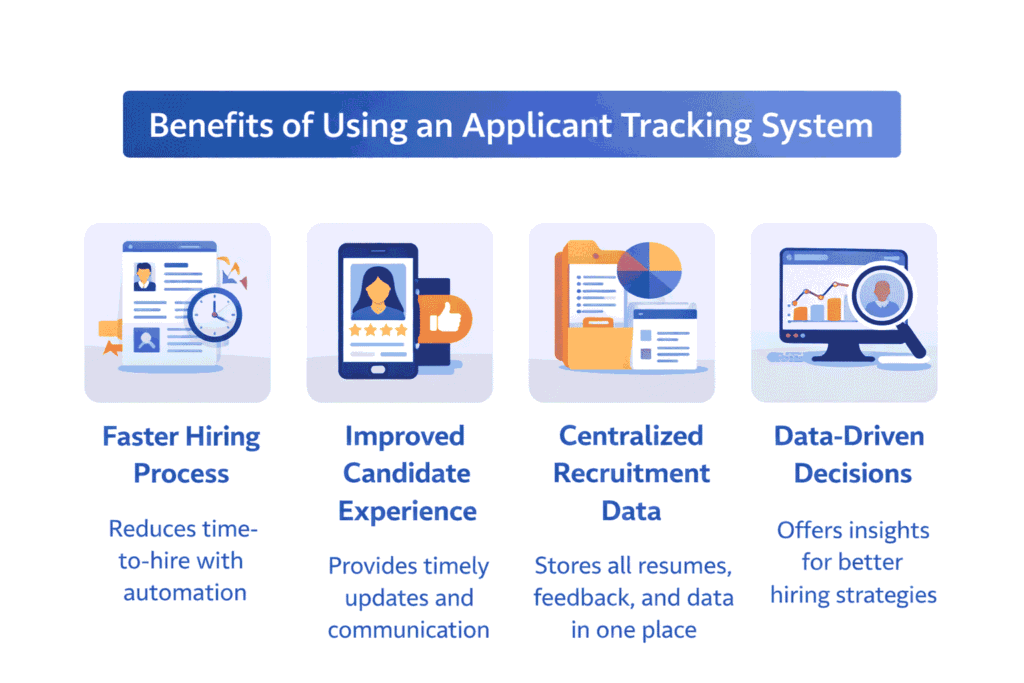
Benefits of Using an Applicant Tracking System
1. Faster Hiring Process
An ATS automates resume screening, shortlisting, and communication, significantly reducing time-to-hire.
2. Improved Candidate Experience
Automated responses, timely updates, and structured communication create a positive impression for applicants.
3. Centralized Recruitment Data
All candidate information, resumes, and feedback are stored in one place, making it easy to track and retrieve.
4. Better Collaboration
Hiring managers, recruiters, and HR teams can collaborate, share feedback, and make decisions seamlessly.
5. Reduced Hiring Costs
Automation reduces manual effort, agency dependency, and prolonged vacancies, saving recruitment costs.
6. Data-Driven Decisions
Advanced analytics and reports help identify hiring bottlenecks and improve recruitment strategies.
Key Features of a Modern Applicant Tracking System
When choosing an ATS, it’s important to look for features that align with your hiring goals.
Must-Have ATS Features:
- Resume parsing and keyword matching
- Job posting to multiple platforms
- Candidate database management
- Interview scheduling and feedback
- Customizable workflows
- Analytics and reporting dashboards
- Career page integration
- Compliance and data security
Advanced ATS platforms also include AI-powered screening, predictive analytics, and skill-based assessments to further enhance hiring accuracy.
Applicant Tracking System for Small, Medium & Large Businesses
For Startups & Small Businesses
An ATS helps small teams stay organized, manage limited resources, and compete with larger companies by hiring smarter.
For Mid-Sized Companies
As hiring volume grows, an ATS ensures scalability, consistency, and better collaboration across departments.
For Enterprises
Enterprise-grade ATS solutions handle bulk hiring, complex workflows, compliance requirements, and advanced analytics with ease.
ATS and SEO-Optimized Hiring
Modern ATS platforms also support SEO-friendly job postings. Optimized job descriptions rank better on Google Jobs and search engines, increasing visibility and attracting high-quality candidates organically.
SEO-enabled ATS features include:
- Structured job data
- Mobile-optimized career pages
- Fast loading job listings
- Integration with Google Jobs
Common Myths About Applicant Tracking Systems
Myth 1: ATS rejects good candidates automatically
Reality: An ATS only filters based on criteria set by recruiters. Smart configuration ensures quality screening.
Myth 2: ATS is only for large companies
Reality: Businesses of all sizes benefit from ATS automation and organization.
Myth 3: ATS makes hiring impersonal
Reality: Automation actually frees recruiters to focus more on meaningful human interactions.
How AI is Transforming Applicant Tracking Systems
AI-powered Applicant Tracking Systems are redefining recruitment by:
- Matching candidates based on skills, not just keywords
- Reducing unconscious bias
- Predicting candidate success
- Automating interview scheduling
- Providing real-time hiring insights
AI helps recruiters make smarter, fairer, and faster hiring decisions.
Choosing the Right Applicant Tracking System
Before selecting an ATS, consider:
- Your hiring volume and business size
- Ease of use and user experience
- Customization and scalability
- Integration with HR tools
- Customer support and training
- Pricing and ROI
A flexible, AI-driven ATS ensures long-term value and growth.
Why Businesses Trust Third Bracket for ATS Solutions
At Third Bracket, we understand that every organization has unique hiring challenges. Our Applicant Tracking System is designed to simplify recruitment, improve hiring accuracy, and enhance candidate experience—all while being scalable and SEO-friendly.
With AI-powered screening, smart workflows, and real-time analytics, Third Bracket helps companies hire faster and better without compromising quality.
Future of Applicant Tracking Systems
The future of ATS lies in:
- Skill-based hiring over resume-based screening
- Deeper AI and machine learning integration
- Seamless candidate-centric experiences
- Predictive workforce planning
Organizations that adopt advanced ATS solutions today will gain a competitive edge tomorrow.
Final Thoughts
An Applicant Tracking System is the foundation of efficient, scalable, and modern recruitment. From automating routine tasks to enabling data-driven decisions, an ATS empowers organizations to hire the right talent at the right time.
If your business aims to grow, reduce hiring costs, and improve candidate experience, investing in a robust Applicant Tracking System is no longer optional—it’s essential.
What is an Applicant Tracking System (ATS)?
An Applicant Tracking System (ATS) is a software solution that helps businesses streamline their hiring process by managing job applications, screening resumes, and tracking candidates throughout the recruitment lifecycle.
How does an Applicant Tracking System work?
An ATS works by collecting job applications from multiple sources, organizing candidate data, and using filters or AI to shortlist the most relevant candidates. It automates tasks like resume screening, interview scheduling, and communication.
Why is an Applicant Tracking System important for businesses?
An ATS improves hiring efficiency, reduces manual work, and helps recruiters find the best candidates faster. It also enhances collaboration, ensures better candidate experience, and supports data-driven hiring decisions.
Can small businesses use an Applicant Tracking System?
Yes, many ATS platforms are designed specifically for small and medium businesses. They offer scalable features, affordable pricing, and easy-to-use interfaces that help small teams manage recruitment effectively.
What features should you look for in an Applicant Tracking System?
Key features to look for include resume parsing, job posting integration, candidate tracking, interview scheduling, analytics, and AI-based screening. A user-friendly interface and integration with HR tools are also important.