
In today’s competitive business environment, people are no longer managed based on assumptions—they are managed based on data. Organizations that understand their workforce, predict future hiring needs, reduce employee turnover, and improve productivity gain a significant competitive advantage.
This is exactly where HR analytics software becomes essential.
Modern HR teams deal with thousands of employee data points every day, from recruitment metrics and employee engagement to performance reviews, skills, learning progress, and retention. Without the right technology, this data remains scattered across spreadsheets and disconnected systems.
HR analytics software transforms this raw data into meaningful insights that help businesses make informed workforce decisions.
Whether you’re a growing startup, a mid-sized company, or a global enterprise, investing in HR analytics can help improve hiring quality, increase employee satisfaction, optimize workforce planning, and build stronger teams.
In this guide, you’ll learn everything about HR analytics software, including its features, benefits, use cases, implementation strategies, and how AI is reshaping workforce intelligence.
What is HR Analytics Software?
HR analytics software is a digital platform that collects, organizes, analyzes, and visualizes workforce data to help HR professionals make data-driven decisions.
Instead of relying on instinct or manual reporting, HR leaders can monitor employee trends, recruitment performance, workforce productivity, turnover patterns, skills availability, compensation effectiveness, and many other HR metrics from a single platform.
The goal isn’t simply reporting data.
The goal is helping organizations answer questions like:
- Why are employees leaving?
- Which departments have the highest engagement?
- What skills will the organization need next year?
- Which recruitment channels deliver the best candidates?
- Who is ready for leadership roles?
- Which teams are at risk of burnout?
The answers allow businesses to make proactive rather than reactive decisions.
Why HR Analytics Matters More Than Ever
Today’s workforce is changing rapidly.
Organizations are dealing with:
- Hybrid work environments
- Rising employee expectations
- Skill shortages
- Higher hiring costs
- Increased competition for talent
- Workforce planning challenges
- AI-driven transformation
Without reliable workforce insights, companies often struggle with:
- High employee turnover
- Inefficient hiring
- Poor succession planning
- Low engagement
- Skills gaps
- Rising recruitment expenses
HR analytics software helps eliminate these challenges by providing visibility into workforce trends before they become business problems.
Key Features of HR Analytics Software
Not all HR analytics platforms are the same, but leading solutions typically include several essential capabilities.
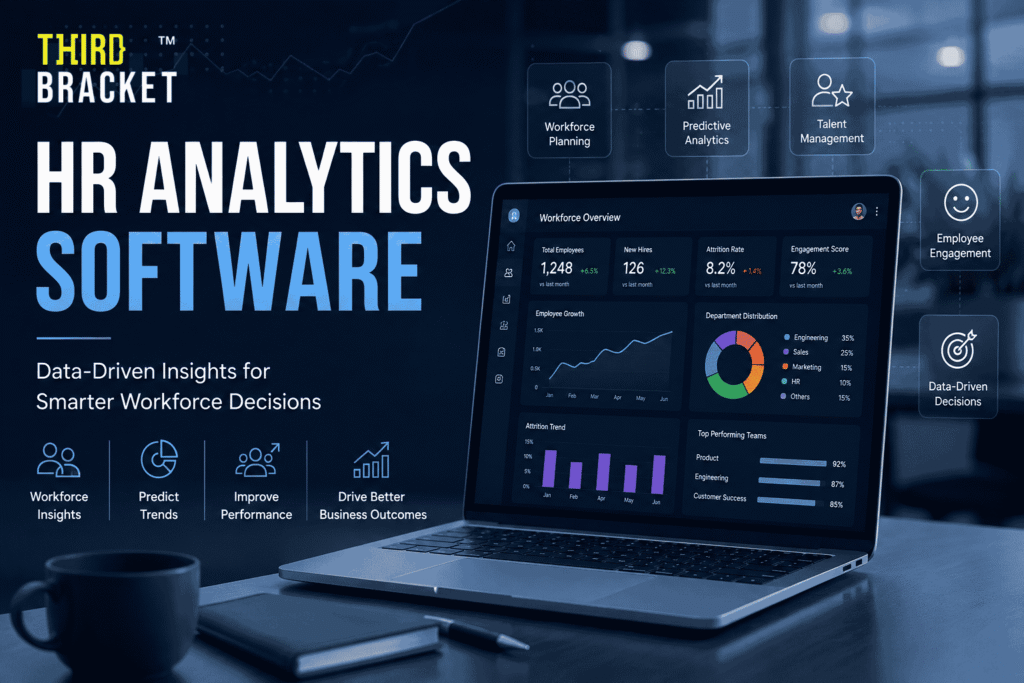
Workforce Dashboards
Interactive dashboards provide real-time visibility into important HR metrics such as:
- Employee headcount
- Hiring trends
- Attrition rate
- Diversity metrics
- Workforce demographics
- Department performance
- Employee movement
Instead of creating manual reports every month, HR teams can access live data whenever needed.
Recruitment Analytics
Recruitment analytics helps organizations measure hiring efficiency by tracking:
- Time-to-hire
- Cost-per-hire
- Source effectiveness
- Offer acceptance rate
- Candidate conversion rates
- Interview performance
- Recruiter productivity
These insights help HR teams continuously improve recruitment strategies.
Employee Performance Analytics
Performance management becomes more effective when supported by data.
HR analytics software helps monitor:
- Goal achievement
- Performance ratings
- Productivity trends
- Team comparisons
- High-performing employees
- Leadership potential
Managers gain a clearer understanding of employee development needs.
Employee Engagement Analysis
Understanding employee sentiment is critical for retention.
HR analytics platforms can measure:
- Survey responses
- Employee feedback
- Engagement scores
- Team morale
- Workplace satisfaction
- Manager effectiveness
Organizations can quickly identify departments requiring attention.
Attrition Prediction
One of the most valuable capabilities of modern HR analytics software is predictive attrition analysis.
Instead of waiting for resignations, AI models analyze patterns such as:
- Declining engagement
- Reduced productivity
- Promotion delays
- Compensation gaps
- Attendance behavior
- Career progression
This allows HR teams to intervene before valuable employees leave.
Skills Analytics
Skills have become one of the most valuable organizational assets.
HR analytics software can help organizations:
- Identify available skills
- Detect skill gaps
- Map employee capabilities
- Recommend learning paths
- Build internal talent marketplaces
- Support workforce reskilling
This becomes increasingly important as businesses adopt AI and automation.
Learning & Development Analytics
Learning investments should generate measurable business outcomes.
Analytics software tracks:
- Course completion
- Learning effectiveness
- Skill improvement
- Certification progress
- Training ROI
- Future learning recommendations
This ensures training budgets are invested wisely.
Benefits of HR Analytics Software
Organizations that use HR analytics consistently experience measurable improvements across multiple HR functions.
Better Hiring Decisions
Analytics reveals which sourcing channels, recruiters, interview methods, and assessments produce the highest-quality hires.
This reduces hiring costs while improving recruitment outcomes.
Improved Employee Retention
By identifying early warning signs of turnover, HR teams can implement targeted retention strategies before employees resign.
Reducing attrition saves significant recruitment and onboarding costs.
Data-Driven Workforce Planning
Business growth requires accurate workforce planning.
Analytics helps organizations forecast:
- Hiring demand
- Retirement trends
- Internal mobility
- Future skill requirements
- Leadership pipelines
This improves long-term workforce readiness.
Enhanced Employee Experience
Organizations gain deeper insight into employee satisfaction, engagement, recognition, career growth, and workplace culture.
Better employee experiences often translate into higher productivity.
Increased HR Efficiency
Manual reporting consumes valuable HR time.
Automation enables HR professionals to focus on strategic initiatives instead of spreadsheets.
Better Business Decisions
HR analytics connects workforce performance with business outcomes.
Executives gain evidence-based insights for strategic decision-making.
HR Analytics Metrics Every Business Should Track
Successful HR analytics begins with tracking the right metrics.
Some of the most valuable KPIs include:
- Employee turnover rate
- Retention rate
- Time-to-fill
- Time-to-hire
- Cost-per-hire
- Absenteeism rate
- Employee engagement score
- Internal mobility rate
- Diversity ratio
- Performance distribution
- Training completion rate
- Learning effectiveness
- Revenue per employee
- Employee productivity
- Leadership readiness
These metrics provide a comprehensive picture of workforce health.
How AI is Transforming HR Analytics Software
Artificial Intelligence is changing HR analytics from descriptive reporting to predictive decision-making.
Modern AI-powered HR analytics software can:
- Predict employee turnover
- Recommend internal candidates
- Detect workforce risks
- Identify future skill shortages
- Recommend personalized learning
- Improve workforce planning
- Match employees to projects
- Identify high-potential talent
Rather than simply showing historical reports, AI enables organizations to prepare for future workforce challenges.
Who Should Use HR Analytics Software?
HR analytics is valuable across organizations of all sizes.
Small Businesses
Growing companies can monitor hiring efficiency, employee satisfaction, and workforce costs without building large HR teams.
Mid-Sized Companies
Organizations experiencing rapid growth gain better visibility into workforce planning, retention, and employee development.
Large Enterprises
Enterprise organizations benefit from advanced workforce intelligence, predictive analytics, succession planning, and strategic talent management.
Common Use Cases of HR Analytics Software
Organizations use HR analytics software in many different scenarios.
Recruitment Optimization
Improve hiring quality while reducing recruitment costs.
Employee Retention
Identify employees at risk of leaving.
Succession Planning
Recognize future leaders based on skills, performance, and growth potential.
Workforce Planning
Forecast future hiring requirements based on business growth.
Diversity & Inclusion
Track workforce diversity and identify opportunities for improvement.
Performance Management
Monitor employee goals and organizational productivity.
Compensation Analysis
Evaluate salary competitiveness and pay equity.
Learning Effectiveness
Measure the impact of employee training programs.
How to Choose the Right HR Analytics Software
Selecting the right solution requires careful evaluation.
Consider the following factors:
Ease of Use
The platform should offer intuitive dashboards and simple reporting tools.
AI Capabilities
Look for predictive analytics, workforce forecasting, and intelligent recommendations.
Integration
The software should integrate seamlessly with HRIS, payroll, recruitment, performance, and learning systems.
Scalability
Choose a solution that grows alongside your organization.
Custom Dashboards
Different stakeholders require different insights.
Flexible reporting improves decision-making.
Data Security
Employee information is highly sensitive.
Ensure the platform follows strong security and compliance standards.
Best Practices for Successful HR Analytics
Implementing software alone isn’t enough.
Organizations should also:
- Define clear HR objectives
- Focus on meaningful KPIs
- Maintain accurate employee data
- Train HR teams on analytics
- Regularly review workforce trends
- Share insights with leadership
- Continuously improve reporting processes
The most successful organizations treat analytics as an ongoing strategy rather than a one-time project.
The Future of HR Analytics Software
The future of HR analytics is becoming increasingly intelligent.
Organizations are moving beyond dashboards toward platforms that combine:
- AI-driven workforce intelligence
- Skills analytics
- Talent marketplace capabilities
- Workforce forecasting
- Predictive hiring
- Career path recommendations
- Internal mobility planning
- Real-time decision support
As businesses continue to embrace digital transformation, HR analytics will become a core component of strategic workforce management.
Companies that leverage workforce data effectively will be better positioned to attract top talent, improve employee experiences, and build resilient organizations.
Why Third Bracket is the Smarter Choice for HR Analytics
Modern organizations need more than reports—they need actionable workforce intelligence.
Third Bracket helps businesses transform workforce data into strategic insights through advanced HR analytics, AI-powered workforce intelligence, skills visibility, recruitment analytics, performance tracking, and predictive decision-making.
Whether you’re looking to optimize hiring, improve retention, identify critical skills, or build a future-ready workforce, Third Bracket provides the tools needed to make confident, data-driven HR decisions.
By combining analytics with intelligent talent management capabilities, organizations can create a stronger, more agile workforce while supporting long-term business growth.
Conclusion
HR is no longer just about managing employees—it is about enabling business success through informed decisions.
HR analytics software empowers organizations to understand their workforce, identify opportunities, predict challenges, and improve every stage of the employee lifecycle.
From recruitment and employee engagement to workforce planning and leadership development, analytics provides the visibility businesses need to stay competitive.
As AI continues to reshape human resources, investing in HR analytics software is becoming a strategic necessity rather than an optional upgrade.
Organizations that embrace data-driven HR today will be better prepared for tomorrow’s workforce challenges.
If your goal is to build a more intelligent, agile, and high-performing workforce, implementing modern HR analytics software is one of the smartest investments your business can make.