
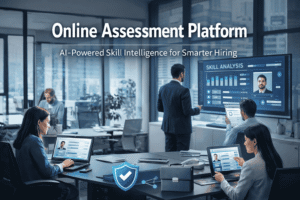
Hiring the right talent has always been a challenge for organizations. Traditional recruitment methods—resumes, manual interviews, and subjective evaluations—often fail to measure a candidate’s real capabilities. In today’s competitive and skill-driven job market, companies need smarter ways to evaluate talent.
This is where an online assessment platform becomes essential.
An online assessment platform allows organizations to evaluate candidates and employees through structured digital tests, competency evaluations, and skill-based assessments. These platforms provide data-driven insights that help companies make better hiring decisions and develop future-ready workforces.
Modern platforms like Third Bracket are transforming this process by combining AI-powered skill profiling, competency frameworks, and talent intelligence to help organizations identify the right talent faster and more accurately.
In this blog, we’ll explore what an online assessment platform is, why businesses need it, key features to look for, and how platforms like Third Bracket are reshaping the future of hiring.

What is an Online Assessment Platform?
An online assessment platform is a digital system that helps organizations evaluate the skills, knowledge, behavioral traits, and capabilities of candidates or employees through structured online tests and analytics.
Instead of relying solely on resumes or interviews, companies use these platforms to measure real performance indicators such as:
- Technical skills
- Cognitive abilities
- Behavioral competencies
- Leadership potential
- Cultural fit
- Problem-solving abilities
The platform collects and analyzes data from assessments to generate insights that help recruiters and HR teams make informed decisions.
Modern talent platforms integrate assessment engines with broader workforce intelligence systems to improve hiring accuracy and workforce planning.
Why Businesses Need an Online Assessment Platform
The hiring landscape is rapidly evolving. Companies no longer hire based on job titles alone—they hire based on skills and competencies.
Here are the major reasons why organizations are adopting online assessment platforms.
1. Improve Hiring Accuracy
Resumes often fail to reflect real-world capabilities. Candidates may exaggerate experience or skills.
An online assessment platform evaluates candidates through structured tests and real-time data analysis, helping recruiters identify individuals who truly possess the required competencies.
Platforms like Third Bracket even evaluate skills, behavioral qualities, and cultural alignment to improve hiring outcomes.
2. Reduce Time-to-Hire
Manual screening and interview processes can take weeks.
Online assessments automate large parts of the evaluation process, allowing companies to shortlist candidates quickly. This speeds up recruitment and reduces operational costs.
AI-driven hiring platforms can also automate resume verification, functional skill assessments, and candidate screening, making hiring faster and more efficient.
3. Enable Skill-Based Hiring
Traditional hiring models focus on:
- Job titles
- Years of experience
- Resume keywords
However, modern organizations are shifting toward skill-based hiring.
An online assessment platform helps companies identify whether a candidate actually has the skills needed for a role rather than relying on credentials alone.
4. Eliminate Bias in Recruitment
Human judgment can unintentionally introduce bias during interviews and hiring decisions.
Online assessment platforms standardize the evaluation process. Every candidate is measured against the same criteria, ensuring fairness and transparency.
AI-driven evaluation tools further enhance decision-making by providing data-backed insights.
5. Identify Skill Gaps in Employees
Online assessment platforms are not only useful for hiring—they are also essential for employee development.
Organizations can evaluate existing employees to identify skill gaps and create personalized development plans.
Platforms like Third Bracket enable companies to analyze workforce skills and design targeted competency development programs.
Key Features of a Modern Online Assessment Platform
Not all assessment platforms are created equal. Modern HR tech platforms provide much more than simple tests.
Here are the most important features to look for.
1. AI-Powered Skill Assessment
Advanced platforms use AI to analyze candidate responses, predict potential performance, and generate deeper insights.
AI-based platforms also help in skill mapping and competency benchmarking, making assessments more intelligent and accurate.
2. Competency-Based Evaluation Framework
A good online assessment platform evaluates candidates using competency frameworks such as:
- Leadership skills
- Communication abilities
- Technical knowledge
- Analytical thinking
These frameworks help companies understand a candidate’s potential beyond technical expertise.
3. Real-Time Analytics and Insights
Modern platforms provide dashboards that help HR teams analyze assessment results instantly.
These analytics provide insights like:
- Candidate skill scores
- Competency gaps
- Role suitability
- Workforce readiness
Such data helps organizations make strategic hiring and workforce planning decisions.
4. Role-to-Skill Mapping
One of the biggest challenges in hiring is aligning job roles with actual skill requirements.
Advanced platforms enable role-to-skill mapping, which helps organizations define the exact competencies required for each role.
This ensures that candidates are evaluated based on the skills that matter most.
5. Integration with HR Systems
A powerful assessment platform should integrate seamlessly with existing HR tools like:
- Applicant Tracking Systems (ATS)
- HR Management Systems (HRMS)
- Learning Management Systems (LMS)
Third Bracket, for example, integrates with popular HR tools and collaboration platforms to streamline workforce management.
How Online Assessment Platforms Transform Hiring
The shift toward digital hiring solutions is transforming how companies build teams.
Instead of relying on intuition or manual processes, organizations are using data-driven talent intelligence.
Here’s how online assessment platforms improve the hiring process.
1. Structured Candidate Evaluation
Every candidate undergoes the same evaluation process, ensuring fair comparisons.
2. Faster Screening
Automated assessments allow companies to evaluate hundreds of candidates simultaneously.
3. Better Role Fit
Skill-based evaluations ensure candidates are aligned with job requirements.
4. Improved Workforce Planning
Assessment data provides insights that help organizations plan hiring strategies more effectively.
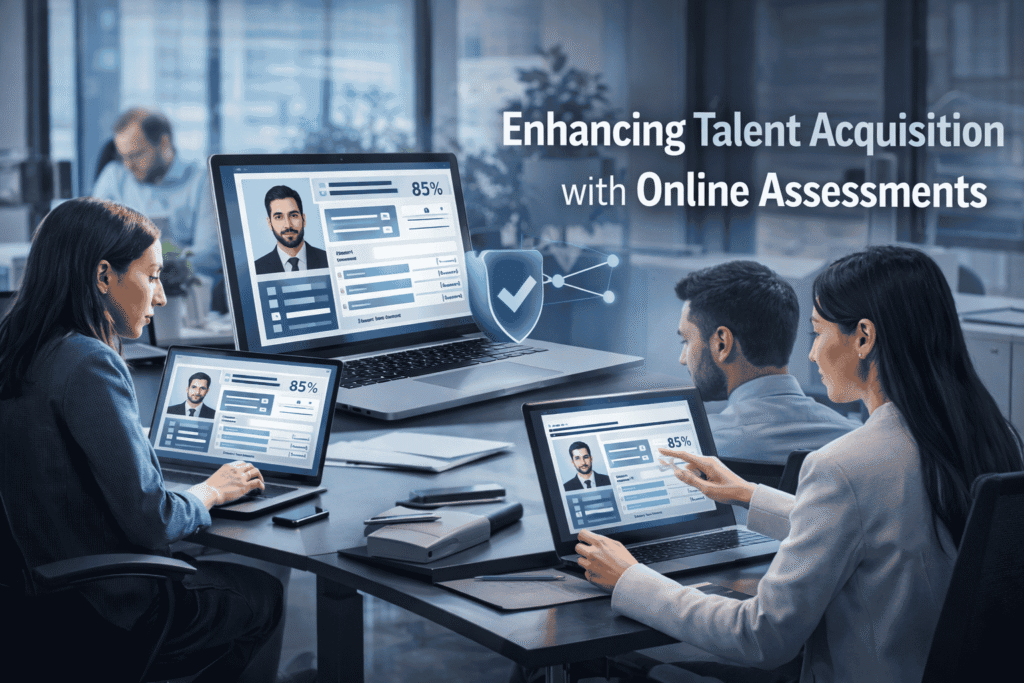
Online Assessment Platforms Beyond Hiring
While hiring is the primary use case, online assessment platforms also play a critical role in employee growth and workforce transformation.
Organizations use these platforms for:
- Leadership assessment
- Internal mobility programs
- Succession planning
- Learning and development
- Skill gap analysis
Talent intelligence platforms combine assessments with workforce analytics to help organizations build stronger talent strategies.
The Role of AI in Modern Online Assessment Platforms
Artificial Intelligence is revolutionizing the way companies evaluate talent.
AI-driven platforms analyze large volumes of candidate data and provide predictive insights about potential performance.
Some of the capabilities enabled by AI include:
- Automated candidate screening
- Behavioral analysis
- Predictive hiring analytics
- Skill profiling
- Workforce capability mapping
Companies adopting AI-powered hiring platforms experience faster hiring cycles, improved hiring accuracy, and better workforce planning outcomes.
How Third Bracket is Redefining Online Assessments
Third Bracket represents the next generation of AI-powered online assessment platforms.
Unlike traditional testing tools, Third Bracket integrates assessments with talent intelligence systems to help organizations build smarter hiring strategies.
Key capabilities include:
AI-Powered Skill Profiling
The platform analyzes workforce skills and provides insights into employee capabilities and development potential.
Competency-Based Assessment Framework
Instead of generic tests, the platform uses intelligent competency frameworks designed around organizational needs.
Talent Intelligence Dashboard
Organizations gain real-time visibility into talent capabilities, skill gaps, and workforce readiness.
Cultural Fit Analysis
Hiring decisions go beyond skills—Third Bracket also evaluates behavioral alignment with company culture.
End-to-End Talent Lifecycle Management
The platform supports the entire employee journey—from hiring to skill development and career growth.
Third Bracket integrates technology, data, and strategy to help organizations build future-ready teams and optimize every stage of the employee lifecycle.
The Future of Online Assessment Platforms
As organizations continue to evolve, hiring and talent management will increasingly rely on skills intelligence and data-driven decision making.
Future online assessment platforms will focus on:
- AI-driven predictive hiring
- Continuous skill tracking
- Real-time workforce analytics
- Adaptive assessments
- Personalized employee development paths
Companies that adopt these technologies early will gain a significant competitive advantage in attracting and retaining top talent.
Conclusion
The modern workforce demands smarter hiring and talent management strategies.
An online assessment platform enables organizations to evaluate skills accurately, eliminate bias, reduce hiring time, and develop future-ready teams.
With AI-powered platforms like Third Bracket, businesses can move beyond traditional recruitment methods and embrace a skill-first approach to talent management.
By combining competency assessments, skill intelligence, and workforce analytics, organizations can make better talent decisions and unlock the true potential of their workforce.
If your organization wants to hire smarter, develop stronger teams, and stay competitive in a rapidly changing job market, adopting a modern online assessment platform is no longer optional—it’s essential.