
In today’s rapidly evolving business landscape, staying competitive requires more than just qualified professionals — it demands that organizations accurately anticipate future skill needs, optimize talent deployment, and improve workforce effectiveness. This is where a predictive skill analytics platform becomes an indispensable asset.
At ThirdBracket, we understand the strategic importance of workforce analytics and empower businesses with advanced solutions that enhance productivity, reduce turnover, and future-proof skill strategies.
Table of Contents
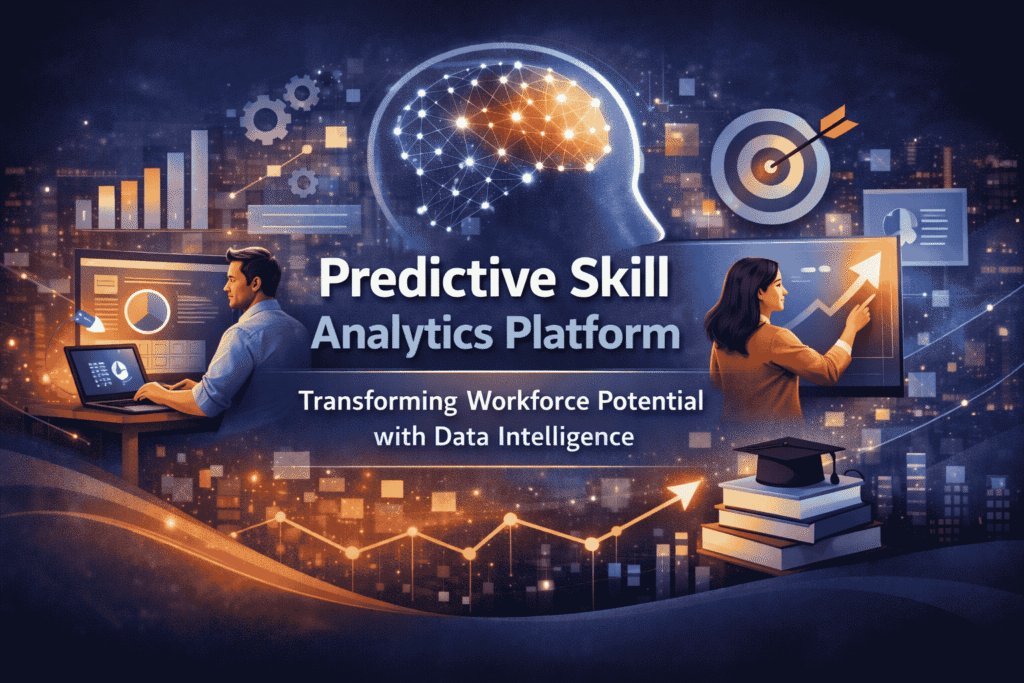
What is a Predictive Skill Analytics Platform?
A predictive skill analytics platform is a technology framework that uses data science, machine learning, and advanced analytics to assess current workforce capabilities and predict future talent and skill requirements. Unlike traditional HR tools that provide static reports, a predictive analytics platform delivers dynamic insights into trends, patterns, and future outcomes — enabling organizations to make smarter, evidence-based talent decisions.
In simple terms, instead of asking “What skills do we have right now?”, businesses can confidently ask “What skills will we need 6-12 months from now?” and get data-backed answers.
Why Predictive Skill Analytics Matters in 2025 and Beyond
Modern businesses operate in an environment where change happens fast:
- Technologies evolve rapidly, introducing new skill requirements
- Remote and hybrid work models impact workforce dynamics
- Employee expectations around career growth are shifting
- Recruitment and retention costs are rising exponentially
In this context, a predictive skill analytics platform is no longer a luxury—it’s a strategic necessity.
Here’s why:
1. Align Skills with Organizational Goals
Predictive analytics helps businesses identify skill gaps and plan workforce development strategies that align with long-term objectives. This ensures:
- Right skills in the right roles
- Better talent utilization
- Stronger operational performance
2. Enhance Learning and Development
By anticipating future skill needs, organizations can build upskilling programs in advance — what many companies call future-ready training. This boosts employee engagement while reducing skill obsolescence.
3. Reduce Hiring Time and Cost
Predictive insights help HR teams proactively source and retain talent before skill shortages impact productivity — saving budgets and minimizing reactive hiring efforts.
4. Retain High-Value Talent
Using analytics to identify performance trends and potential flight risks can dramatically improve retention strategies.
Key Features of a Robust Predictive Skill Analytics Platform
For businesses seeking a future-ready workforce strategy, here are the core features that define the best predictive skill platforms:
1. Skill Gap Analysis
This feature assesses current employee competencies and compares them with future expectations. It identifies:
- Skills that are lacking
- High-performing skill pockets
- Areas poised for automation
2. Predictive Algorithms and AI Models
A powerful analytics engine uses historical data and machine learning to forecast future skill shortages and employee performance trends with high accuracy.
3. Personalized Learning Pathways
Top platforms don’t just spot skill gaps — they recommend the best learning content and career pathways tailored to individual employees.
4. Scalable Dashboards & Reporting
Visual dashboards allow decision-makers to view real-time workforce analytics, trending metrics, and actionable insights in an intuitive format.
5. Integration with HR Systems
To maximize impact, skill analytics platforms should seamlessly integrate with:
- HRIS (Human Resource Information Systems)
- LMS (Learning Management Systems)
- Payroll, Performance Management, and Recruitment tools
The ThirdBracket Advantage: Smarter Skill Intelligence for Every Enterprise
At ThirdBracket, we help businesses unlock the power of predictive workforce analytics with tailor-made solutions. Our platforms are designed to drive measurable business outcomes while enhancing organizational agility.
Here’s what sets us apart:
🔹 Actionable Predictive Insights
We go beyond dashboards — we deliver insights that directly influence strategic workforce decisions.
🔹 AI-Driven Skill Forecasting
Our predictive models use advanced AI to forecast future skill needs and performance trends — enabling proactive talent planning.
🔹 Employee-Centric Learning Pathways
ThirdBracket’s platform supports personalized career development journeys that boost engagement and retention.
🔹 Customizable Analytics
We offer flexible modules that can scale with your business growth — from SMBs to enterprise organizations.
Real-World Use Cases of a Predictive Skill Analytics Platform
1. Strategic Workforce Planning
Global enterprises use predictive analytics to plan headcount and optimize talent deployment across departments.
2. Upskilling & Reskilling Initiatives
Organizations use skill forecasting to anticipate training requirements — improving employee satisfaction and reducing skill gaps before they widen.
3. Succession Planning
Predictive models help identify future leaders early by analyzing performance trends and skill trajectories over time.
4. Recruitment Optimization
Talent acquisition teams use predictive analytics to identify the most relevant candidate profiles and reduce time-to-hire.
How Predictive Skill Analytics Transforms ROI
Investing in a predictive skill analytics platform yields measurable business impact:
📈 Reduced hiring costs
🧠 Improved employee productivity
📊 Better alignment between workforce and business goals
🤝 Increased employee engagement and retention
⚡ Faster decision-making backed by data
Best Practices for Implementing Predictive Skill Analytics
To maximize results, organizations should follow these best practices:
✔ Start With Clean Data
Accurate predictions require accurate data — beginning with updated HR records, performance scores, and training logs.
✔ Set Clear Business Objectives
Define goals such as reducing turnover, closing skill gaps, or improving productivity before deploying analytics.
✔ Encourage Cross-Functional Adoption
HR, L&D, business leads, and executives should all leverage the platform — ensuring alignment and collaboration.
✔ Continuously Measure & Adjust
Regularly evaluate predictive insights and refine models based on outcomes and changing business needs.
Future Trends: What’s Next for Predictive Skill Analytics?
As technology evolves, so will predictive skill platforms. Some emerging trends include:
🔹 Real-time skill assessments through digital tracking
🔹 AI-powered career path recommendation engines
🔹 Integration with virtual reality (VR) learning tools
🔹 Automated talent matchmaking and internal mobility support
The future workforce will be smarter, faster, and more adaptive — and predictive skill analytics will be at the core of this transformation.
Conclusion
A predictive skill analytics platform isn’t just a tool — it’s a strategic advantage that empowers organizations to make data-backed decisions, optimize talent performance, and stay competitive in a dynamic market.
Whether you’re scaling rapidly, enhancing internal training programs, or planning workforce transitions, ThirdBracket delivers innovative analytics solutions that help you build a future-ready workforce.
🚀 Ready to unlock workforce intelligence?
👉 Visit https://www.thirdbracket.in/ to explore how our predictive skill analytics platform can transform your talent strategy and drive measurable business results.