
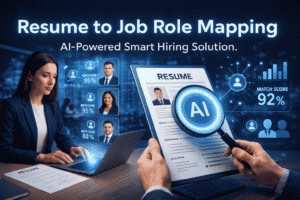
Recruitment today is no longer just about collecting resumes and scheduling interviews. Companies receive hundreds or even thousands of applications for a single role, and manually matching candidates to the right job positions can be time-consuming, inefficient, and prone to human bias.
This is where Resume to Job Role Mapping becomes a powerful solution. By using advanced technologies such as Artificial Intelligence (AI), Natural Language Processing (NLP), and machine learning, companies can automatically match resumes with the most suitable job roles based on skills, experience, and qualifications.
Platforms like Third Bracket are leading the way in building intelligent recruitment systems that simplify hiring and help organizations find the best candidates faster.
In this article, we will explore what resume to job role mapping is, how it works, its benefits, and how AI-powered platforms are reshaping modern recruitment.

Table of Contents
What Is Resume to Job Role Mapping?
Resume to job role mapping is the process of analyzing a candidate’s resume and matching it with the most suitable job roles based on specific criteria such as:
- Skills
- Experience
- Education
- Certifications
- Industry exposure
- Role responsibilities
Instead of recruiters manually reading every resume, intelligent systems scan resumes and compare them with job descriptions to identify the best match.
For example:
A candidate with skills in Python, Data Analysis, and Machine Learning can automatically be mapped to roles such as:
- Data Analyst
- Machine Learning Engineer
- AI Developer
- Data Scientist
This automated process significantly reduces hiring time and improves the quality of candidate selection.
Why Traditional Resume Screening Is Inefficient
Many companies still rely on manual resume screening, which comes with several limitations.
1. Time-Consuming Process
Recruiters often spend hours reviewing resumes for a single role.
2. Human Bias
Manual selection may unintentionally favor certain candidates.
3. Skill Overlook
Sometimes strong candidates are rejected because recruiters miss relevant skills hidden within resumes.
4. Poor Role Matching
Candidates may be shortlisted for roles that don’t fully align with their expertise.
This is why organizations are moving towards AI-driven resume mapping systems like those developed by Third Bracket to automate and improve the hiring workflow.
How Resume to Job Role Mapping Works
Modern resume mapping systems rely on multiple technologies to analyze resumes and match them with job roles.
1. Resume Parsing
The first step is resume parsing, where the system extracts key information from resumes, including:
- Candidate name
- Skills
- Work experience
- Education
- Certifications
- Job titles
This structured data allows the system to analyze candidates effectively.
2. Skill Identification
AI algorithms identify important skills mentioned in the resume and categorize them.
For example:
| Resume Skill | Category |
|---|---|
| Python | Programming |
| SEO | Digital Marketing |
| TensorFlow | Machine Learning |
| Excel | Data Analysis |
This classification helps determine which job roles are most relevant.
3. Job Description Analysis
The system also analyzes the job description to identify required skills, responsibilities, and experience levels.
Example job description requirements:
- 3+ years experience
- Python programming
- Machine learning frameworks
- Data visualization
4. Intelligent Matching Algorithm
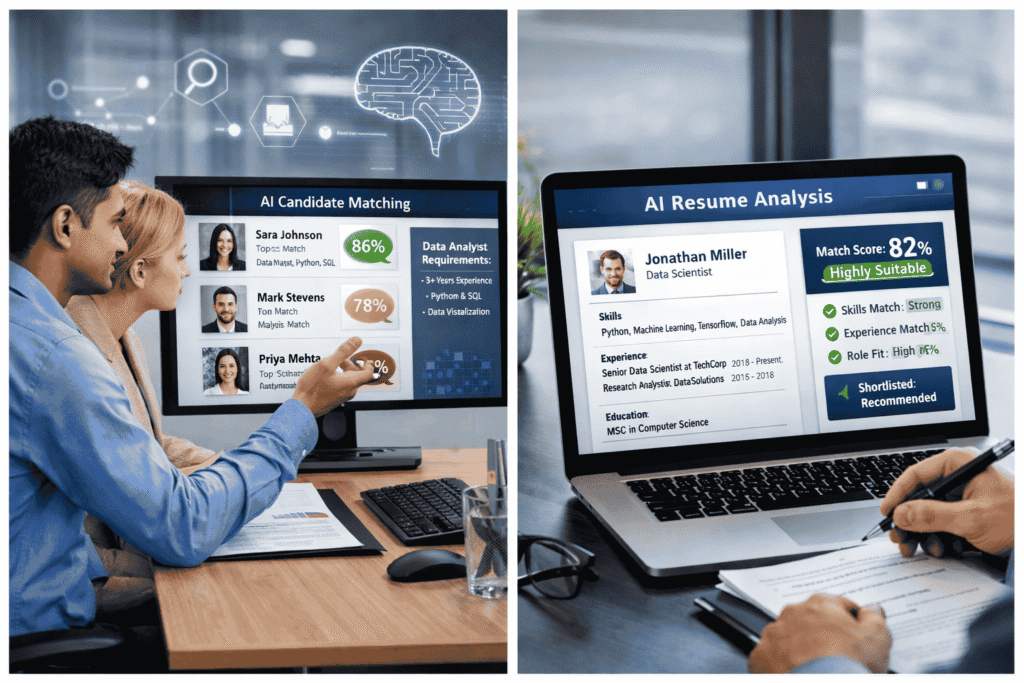
After analyzing both resumes and job descriptions, AI calculates a match score based on:
- Skill similarity
- Experience level
- Industry relevance
- Role alignment
Candidates with the highest match score are automatically shortlisted.
Benefits of Resume to Job Role Mapping
Implementing resume-to-role mapping technology offers several advantages for companies.
Faster Hiring Process
Automated resume mapping drastically reduces the time required for screening candidates.
Instead of reviewing hundreds of resumes manually, recruiters can focus only on top-matched candidates.
Better Candidate Matching
AI ensures that candidates are matched with roles based on their actual skills and experience, leading to higher job satisfaction and better employee retention.
Reduced Hiring Bias
AI-driven systems evaluate candidates based on data rather than personal preferences, ensuring fair and unbiased recruitment.
Improved Recruiter Productivity
Recruiters can spend more time on strategic tasks like interviewing and candidate engagement rather than resume screening.
Enhanced Candidate Experience
Candidates are more likely to be considered for roles that truly match their expertise.
This improves overall hiring satisfaction.
Skill Intelligence Platform — Build a Future-Ready Workforce with ThirdBracket – CLICK HERE
Role of AI in Resume to Job Role Mapping
Artificial Intelligence plays a crucial role in making resume mapping accurate and efficient.
AI technologies enable systems to:
- Understand context within resumes
- Identify hidden skills
- Recognize synonyms for technical terms
- Predict candidate suitability for multiple roles
For example:
A candidate who mentions “ReactJS development” may also be suitable for roles requiring front-end development, even if the exact keyword is not mentioned.
This intelligent interpretation improves hiring accuracy.
How Third Bracket Enables Smart Resume Mapping
Modern recruitment platforms like Third Bracket integrate AI-powered features that simplify hiring and talent discovery.
The platform focuses on building skill intelligence systems that analyze candidate capabilities and match them with relevant job roles.
Key capabilities include:
AI Resume Analysis
Automatically extract and analyze candidate information from resumes.
Smart Role Matching
Match candidates to multiple job roles based on their skill sets.
Skill Intelligence
Identify candidate strengths and recommend suitable roles.
Data-Driven Hiring
Provide insights and match scores to support recruiter decision-making.
These capabilities help companies streamline their recruitment pipeline while ensuring the best candidate-job fit.
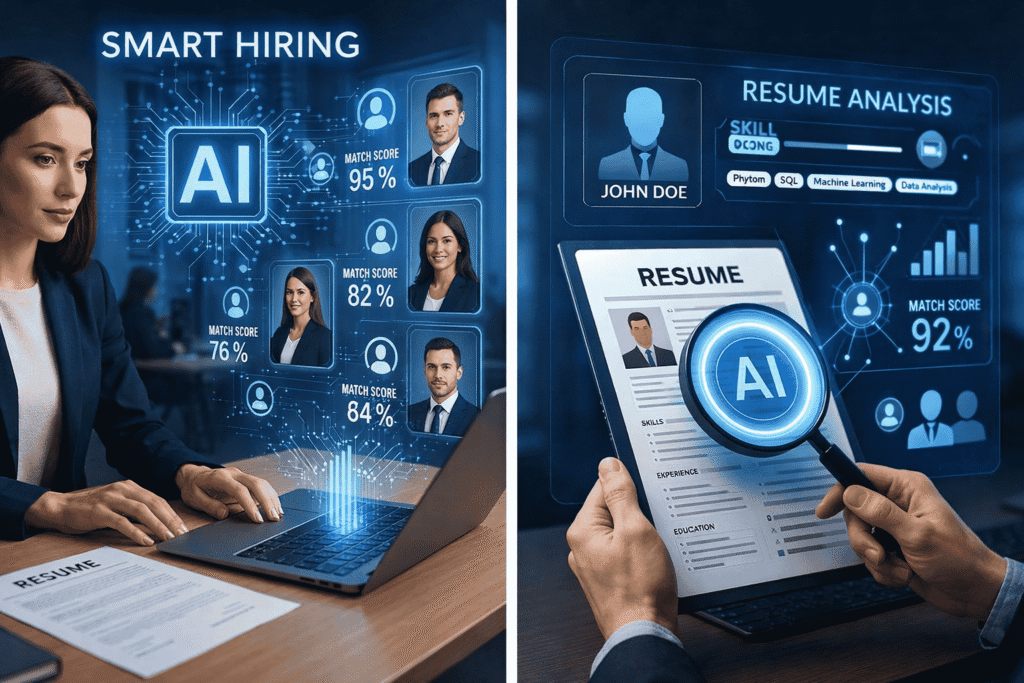
Use Cases of Resume to Job Role Mapping
Resume mapping technology can be applied across multiple industries and hiring scenarios.
Corporate Recruitment
Large organizations receive thousands of applications.
Resume mapping helps them quickly identify suitable candidates for multiple job roles.
Staffing Agencies
Recruitment agencies can match candidates with client requirements efficiently.
This improves placement rates.
Campus Hiring
Universities and companies can map student resumes to entry-level job roles.
This helps companies quickly shortlist fresh graduates.
Internal Talent Mobility
Companies can analyze employee skills and map them to internal job opportunities.
This supports career growth and workforce optimization.
Challenges in Resume Mapping
While resume mapping offers numerous benefits, there are some challenges that organizations must address.
Inconsistent Resume Formats
Candidates use different resume formats, making data extraction difficult.
Advanced AI systems overcome this using intelligent parsing techniques.
Skill Variations
Different candidates may use different words for the same skill.
For example:
- Machine Learning
- ML
- Predictive Modeling
AI systems need strong language understanding to recognize these variations.
Evolving Job Roles
Technology is constantly changing, which means job roles and skill requirements also evolve.
AI systems must be continuously updated with new skills and industry trends.
Best Practices for Implementing Resume to Job Role Mapping
Organizations planning to implement resume mapping should follow these best practices.
Use AI-Powered Platforms
Manual systems are inefficient. AI platforms offer better scalability and accuracy.
Maintain Updated Skill Databases
Ensure that the system includes the latest technologies and skill categories.
Combine Automation with Human Oversight
While AI handles screening, recruiters should still review final shortlisted candidates.
Analyze Hiring Data
Use analytics to track recruitment performance and improve hiring strategies.
Future of Resume to Job Role Mapping
The future of recruitment is becoming increasingly AI-driven and skill-focused.
In the coming years, resume mapping systems will evolve to include:
- Predictive hiring analytics
- Behavioral analysis
- Skill gap identification
- Career path recommendations
AI platforms will not only help companies hire better talent but also help candidates discover roles best suited to their capabilities.
Companies adopting intelligent recruitment technologies today will gain a significant competitive advantage in the future.
Conclusion
Resume to job role mapping is transforming the way organizations hire talent. By using AI and data-driven insights, companies can quickly identify the best candidates and ensure the right fit for each role.
Instead of spending hours manually reviewing resumes, recruiters can rely on intelligent systems that analyze candidate skills, experience, and qualifications automatically.
Innovative platforms like Third Bracket are helping businesses modernize their hiring processes through advanced AI-powered recruitment technology.
As recruitment continues to evolve, organizations that adopt smart resume mapping systems will be able to hire faster, reduce bias, and build stronger teams.