
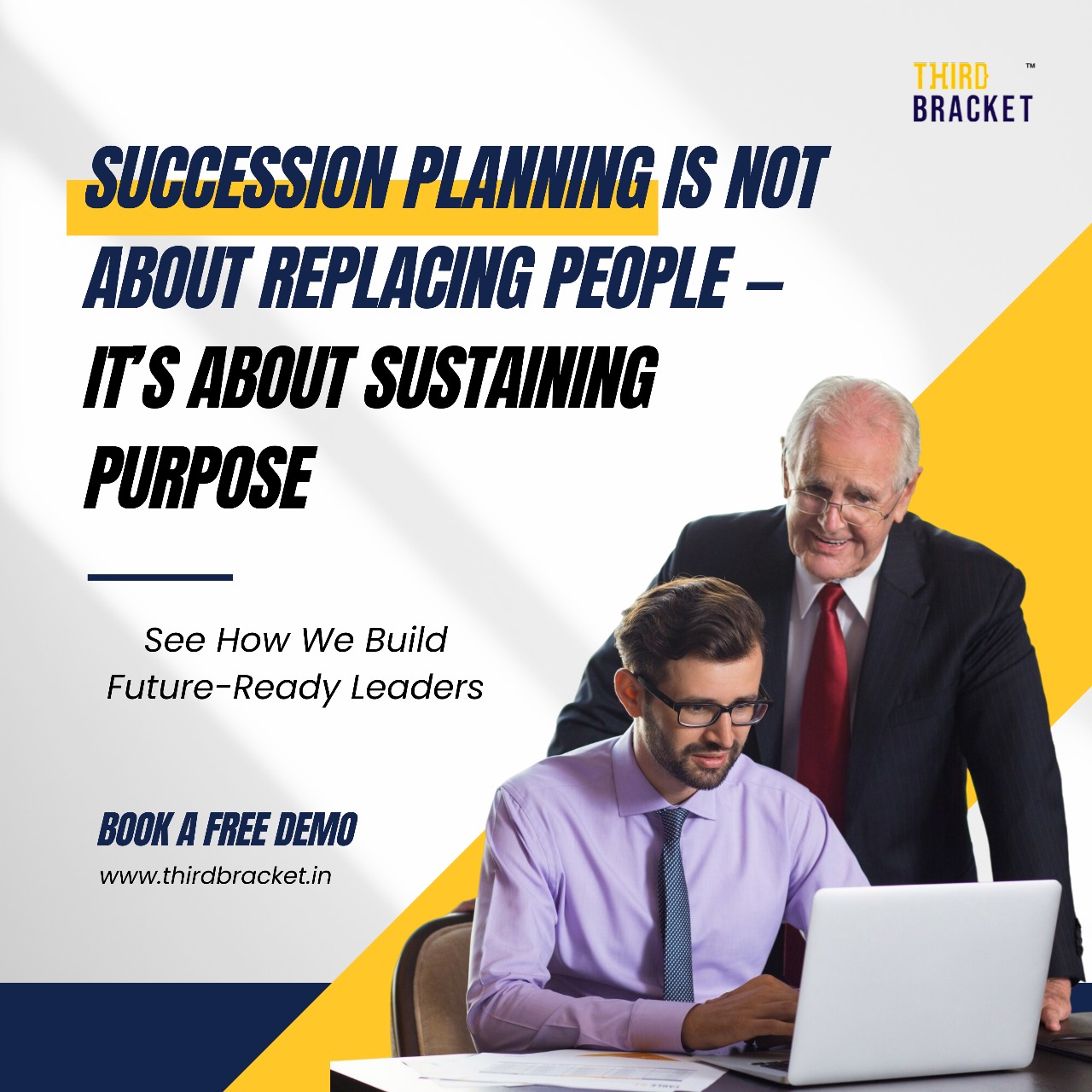
Why Succession Planning Matters
Succession planning is often misunderstood as filling seats or titles. The truth is, it’s a strategic approach to safeguard culture, maintain
confidence, and secure business momentum. Without a proactive plan, organizations risk
disruptions that affect employee morale, client trust, and overall performance.
From Crisis Management to Celebration
Leadership transitions don’t have to be a crisis. With the right approach, they can be a celebration of preparedness. By identifying high-potential talent early and preparing them for future leadership roles, companies ensure smooth transitions without losing critical institutional knowledge.
How Third Bracket Transforms Succession Planning
At ThirdBracket.in, we help organizations design data-driven Individual Development Plans (IDPs) for future leaders. Our AI-powered talent solutions allow companies to:
- Identify high-potential employees before gaps appear
- Map competencies to future leadership needs
- Monitor readiness and skill development continuously
- Align succession strategies with organizational goals
This approach moves succession planning from reactive replacement to strategic workforce transformation. Leaders are developed, culture is preserved, and confidence in transitions soars.
The Future of Leadership Continuity
Investing in succession planning today is investing in long-term resilience. When organizations prioritize people development, leadership pipelines, and AI-driven insights, leadership transitions become an opportunity to strengthen the company, not a moment of uncertainty.