
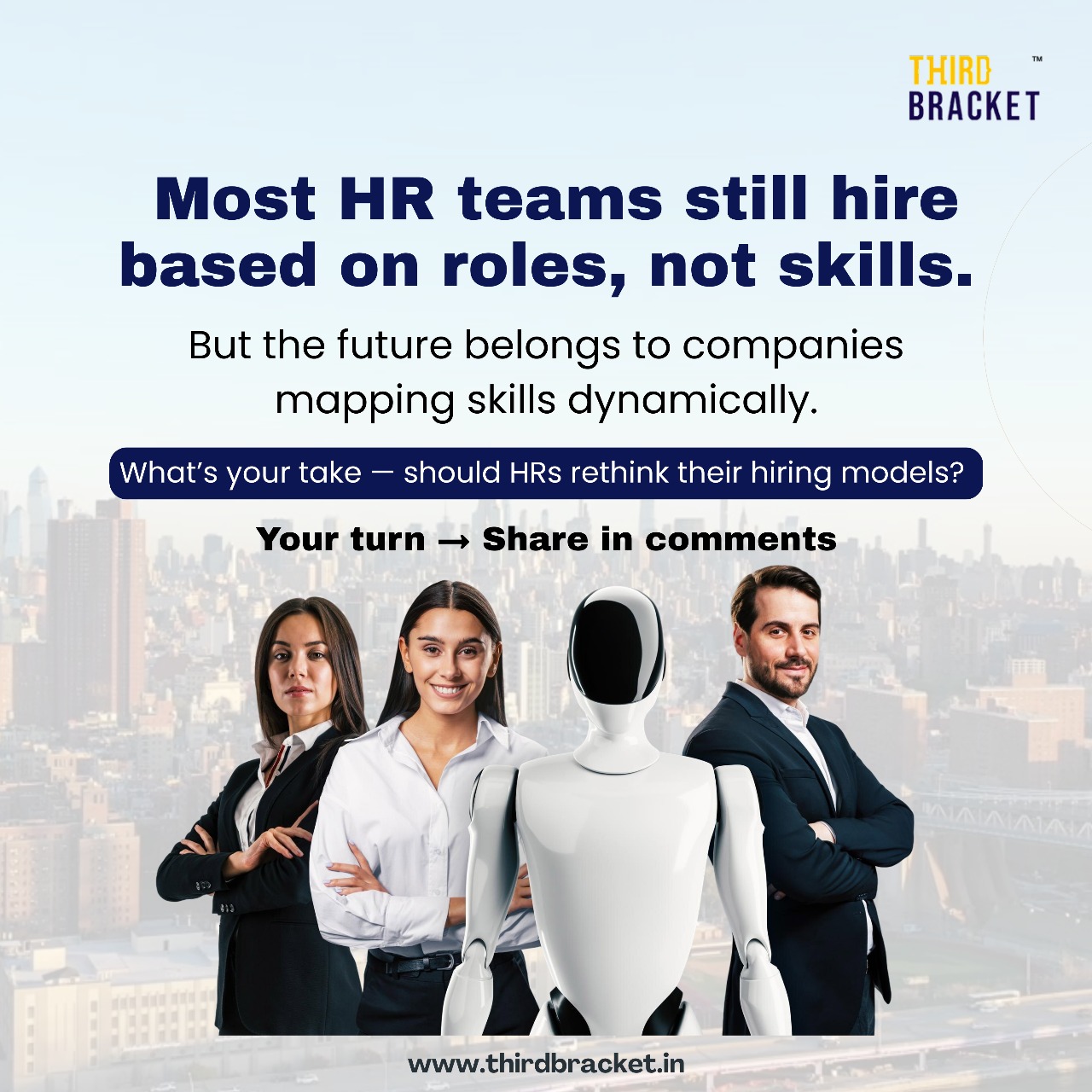
The Problem with Role-Based Hiring
Most HR teams still hire for roles, not skills. This means:
- Candidates are filtered by past experience, not future potential.
- Job descriptions become rigid checklists, ignoring adaptability.
- Teams end up with talent that fits yesterday’s needs, not tomorrow’s.
In a fast-changing business landscape — where technologies evolve monthly and job boundaries blur — roles become outdated faster than resumes get updated.
The Skill-Based Revolution
Forward-thinking companies are breaking free from the traditional model.
They’re building dynamic skill maps that evolve with business needs.
Instead of asking, “What role do we need?” they’re asking,
“What skills will drive our next growth chapter?”
This shift empowers organizations to:
- Identify skill gaps in real time
- Redeploy existing talent efficiently
- Hire for capabilities, not credentials
- Build agile, cross-functional teams ready for change
Where AI Fits In
AI has transformed how companies understand and leverage talent.
At Third Bracket, we use AI-powered skill profiling and role-to-skill mapping to help organizations see beyond resumes.
Our platform dynamically maps workforce skills, aligns them with evolving roles, and ensures every hire (or internal move) adds measurable value.
Because when hiring is based on skills, not assumptions — you build teams that perform, adapt, and grow faster.
The Future Belongs to Skill-Intelligent Organizations
Skill-based hiring isn’t just a trend — it’s a strategic advantage.
It enables businesses to unlock internal talent, reduce attrition, and future-proof their workforce.
Companies that adopt this mindset today will lead tomorrow’s talent economy.
The question is — is your HR team ready to rethink its hiring model?
💬 Join the conversation:
How do you see skill-based hiring reshaping the future of work?
Share your thoughts in the comments below.