
Every organization, whether it is a startup or a large enterprise, is going through some form of change right now. The way people work, the tools they use, and the expectations they bring to the workplace have shifted dramatically in the last few years. This is exactly why a strong workforce transformation strategy is no longer optional — it has become a survival skill for businesses that want to stay relevant, productive, and competitive.
In this blog, we will break down what workforce transformation actually means, why it matters so much right now, and how companies can build a workforce transformation strategy that actually works in the real world, not just on paper.
Table of Contents
What Is Workforce Transformation?
Workforce transformation is the process of redesigning how an organization’s people, processes, and technology work together to meet new business goals. It is not just about hiring new employees or buying new software. A true workforce transformation strategy touches everything — recruitment, training, leadership, culture, employee experience, and even how performance is measured.
Think of it this way: if digital transformation is about upgrading your tools, workforce transformation is about upgrading your people and the systems that support them. Both go hand in hand, but workforce transformation is often overlooked, even though it is the part that decides whether the digital tools are actually used effectively.
Why Workforce Transformation Strategy Matters More Than Ever
A few years ago, workforce planning was a once-a-year exercise. HR teams would sit down, decide on hiring numbers, and move on. That approach simply does not work anymore. Here is why a solid workforce transformation strategy has become a business priority:
1. Skills are becoming outdated faster than ever Technology changes so quickly that the skills your team has today may not be relevant in two or three years. A workforce transformation strategy helps businesses build a culture of continuous learning so employees are always upskilling rather than falling behind.
2. Hybrid and remote work is here to stay Workplaces are no longer limited to one office building. Teams are spread across cities, sometimes across countries. A good workforce transformation strategy accounts for this shift by building flexible policies, better communication tools, and trust-based management styles.
3. Employee expectations have changed People today want more than a paycheck. They want growth, flexibility, purpose, and a workplace that values their wellbeing. Companies that ignore this end up losing their best talent to competitors who understand workforce transformation better.
4. Automation and AI are reshaping job roles Many repetitive tasks are now being handled by automation and artificial intelligence. This does not mean jobs are disappearing; it means job roles are evolving. A workforce transformation strategy prepares employees for this shift instead of letting it catch them off guard.
5. Business agility depends on workforce agility A company can have the best strategy in the world, but if its workforce cannot adapt quickly, that strategy will fail. Workforce transformation builds the kind of agility that lets businesses pivot when the market demands it.
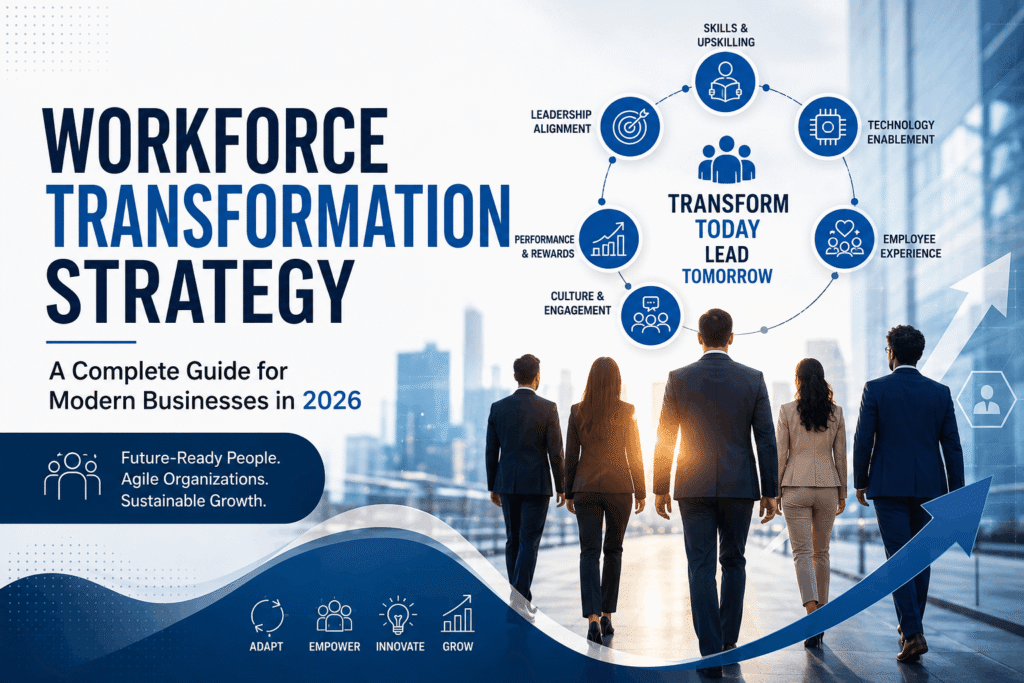
Key Pillars of a Strong Workforce Transformation Strategy
Building a workforce transformation strategy is not a one-time project. It is an ongoing process built on a few core pillars.
1. Leadership Alignment
Transformation cannot succeed if leadership is not fully on board. Leaders need to understand the “why” behind workforce transformation and communicate it clearly to every level of the organization. Without leadership buy-in, even the best workforce transformation strategy will collapse under the weight of internal resistance.
2. Skills Mapping and Upskilling
Before you can transform a workforce, you need to know what skills exist today and what skills will be needed tomorrow. This involves:
- Conducting a detailed skills audit across departments
- Identifying skill gaps tied to future business goals
- Building structured upskilling and reskilling programs
- Encouraging a learning culture instead of one-time training sessions
A workforce transformation strategy that skips this step often ends up training people on the wrong things, wasting time and budget.
3. Technology Adoption
Technology should support people, not replace them carelessly. Choosing the right tools, integrating them smoothly, and training employees to use them confidently is a major part of workforce transformation. This includes everything from collaboration platforms to AI-powered productivity tools.
4. Culture and Communication
Culture is often the hardest part of workforce transformation because it cannot be forced; it has to be nurtured. Open communication, transparency about changes, and involving employees in the transformation process (instead of just announcing decisions) makes adoption much smoother.
5. Performance and Reward Systems
Old performance review systems built around annual ratings do not match the pace of modern work. A workforce transformation strategy should include updated performance frameworks that reward adaptability, collaboration, and continuous improvement, not just hitting fixed targets.
6. Employee Experience
A workforce transformation strategy that ignores employee experience will struggle to retain talent. This means focusing on wellbeing, flexible work arrangements, mental health support, and creating an environment where people genuinely want to stay and grow.
How to Build a Workforce Transformation Strategy Step by Step
If you are starting from scratch, here is a practical roadmap to build a workforce transformation strategy that fits your organization.
Step 1: Assess where you stand today Look honestly at your current workforce capabilities, culture, and technology stack. You cannot plan a transformation without knowing your starting point.
Step 2: Define your future workforce vision What does your organization need to look like in three to five years? Define the skills, roles, and culture required to get there.
Step 3: Identify gaps Compare your current state with your future vision. The gaps you find become the priorities for your workforce transformation strategy.
Step 4: Build a phased implementation plan Trying to transform everything at once usually backfires. Break the strategy into phases — short-term wins, mid-term goals, and long-term structural changes.
Step 5: Invest in continuous learning Make learning a habit, not an event. Encourage employees to take ownership of their development with support from the organization.
Step 6: Measure and adjust Track metrics like employee engagement, productivity, retention, and skill adoption rates. A workforce transformation strategy should be flexible enough to adjust based on what the data shows.
Common Mistakes Companies Make During Workforce Transformation
Even well-intentioned businesses make mistakes when rolling out a workforce transformation strategy. Some of the most common ones include:
- Treating transformation as a one-time project instead of an ongoing process
- Focusing only on technology while ignoring people and culture
- Rolling out changes without clear communication, leading to confusion and resistance
- Not involving middle managers, who play a huge role in day-to-day adoption
- Measuring success only through cost savings instead of long-term capability building
Avoiding these mistakes can make the difference between a workforce transformation strategy that genuinely works and one that fizzles out within a year.
The Role of Leadership in Workforce Transformation
Leaders set the tone for transformation. When leadership genuinely models the behaviors they want to see — continuous learning, openness to feedback, adaptability — employees follow naturally. A workforce transformation strategy driven only by HR memos rarely sticks. It needs visible, consistent leadership involvement to create real cultural change across the organization.
Workforce Transformation Is Not Just About Big Companies
There is a common myth that workforce transformation strategy only applies to large corporations with big budgets. That is simply not true. Small and medium businesses can benefit just as much, sometimes even more, because they can move faster and adapt without layers of bureaucracy slowing them down. Even a small business can start with simple steps like upskilling programs, better communication tools, and flexible work policies, gradually building toward a complete workforce transformation strategy.
Final Thoughts
Workforce transformation is not a trend that will fade away. It is a fundamental shift in how businesses think about their people, processes, and growth. Companies that invest time and effort into building a thoughtful workforce transformation strategy today will be the ones leading their industries tomorrow.
It starts with understanding your people, mapping the skills you need, aligning leadership, and creating a culture where change is welcomed rather than feared. The businesses that get this right will not just survive disruption — they will turn it into their biggest competitive advantage.
Book a Demo- Click Here
If your organization is thinking about where to begin, start small, stay consistent, and treat workforce transformation as an ongoing journey rather than a one-time fix. The results, over time, speak for themselves.